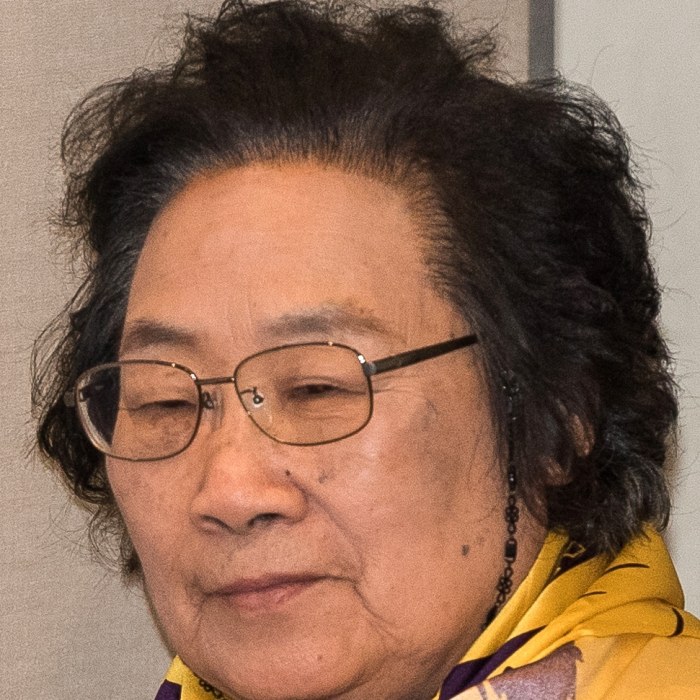
Tu Youyou
Found the malaria drug that has saved millions in a 1,600-year-old Chinese text
Tu Youyou was born in Ningbo in 1930. At 16 she caught tuberculosis and had to leave school for two years, an experience that she has said made her want to study medicine. She trained in pharmacology in Beijing and joined the Academy of Traditional Chinese Medicine, where she spent the 1960s working in obscurity.
In 1969, during the Cultural Revolution, she was put in charge of a group within a secret military programme, Project 523, to find a treatment for malaria, which was killing large numbers of Chinese-backed soldiers in Vietnam. Chloroquine had stopped working. Her husband had been sent to a labour camp, so she left her four-year-old daughter with her parents and did not see her for three years.
She and her team combed through more than 2,000 traditional remedies. Sweet wormwood kept appearing, but extracts of it worked inconsistently. The answer came from a handbook of emergency prescriptions written by Ge Hong in the fourth century, which advised steeping the plant in cold water rather than boiling it. Heat was destroying the active compound. Extracting at low temperature with ether produced something that cleared malaria parasites from mice completely.
There was no safety data and no time. In 1972 she volunteered to be the first human to take it. The compound, artemisinin, became the backbone of malaria treatment worldwide. In China she was called a "three-noes" scientist: no doctorate, no overseas experience, no membership of the academies. In 2015 she became the first Chinese woman to win a Nobel Prize.