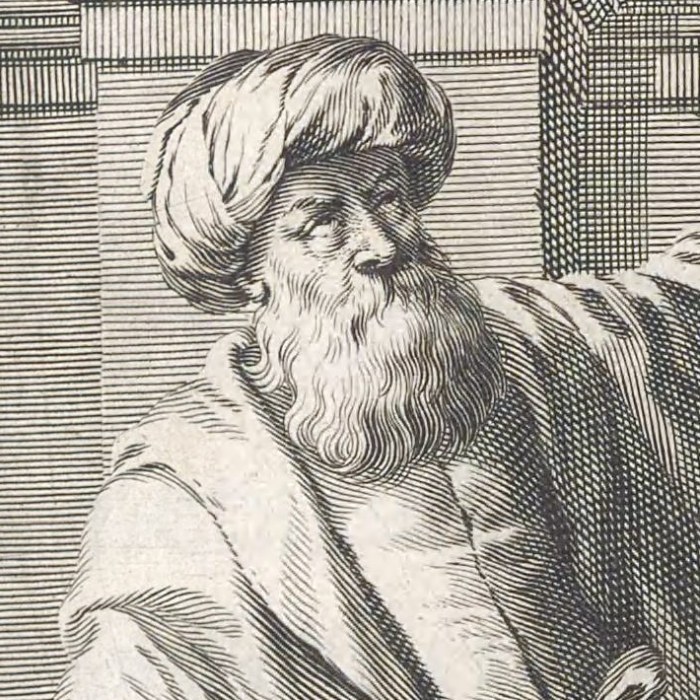
Ibn al-Haytham
Feigned madness to escape a caliph, then spent ten years under house arrest working out how we see
Abu Ali al-Hasan ibn al-Haytham was born in Basra, in what is now Iraq, around 965, and rose to a position in the local administration. He was drawn to mathematics and to the Greek philosophers, and made the mistake of claiming, in a moment of confidence, that he could build works to control the flooding of the Nile. The Fatimid caliph al-Hakim, a ruler of famously unpredictable temper, summoned him to Egypt to do it.
On reaching the Nile near Aswan he saw at once that the task was impossible with the means of the time. According to the medieval accounts, he feared for his life if he admitted failure, and so pretended to have gone mad. He was placed under house arrest in Cairo, where he stayed until al-Hakim vanished in 1021.
Those years, and the ones that followed, produced his great work, the Book of Optics. The prevailing theory, inherited from the Greeks, held that the eye sent out rays to touch objects. He argued from experiment and geometry that light travels from objects into the eye, and he studied how it reflects and bends, using dark chambers with a pinhole to project images of the outside world. Above all he insisted that claims be tested rather than accepted on authority.
The book was translated into Latin and read by Roger Bacon, Kepler and others; the Latin version of his name, Alhazen, was known to every European scholar of optics. He died in Cairo around 1040.