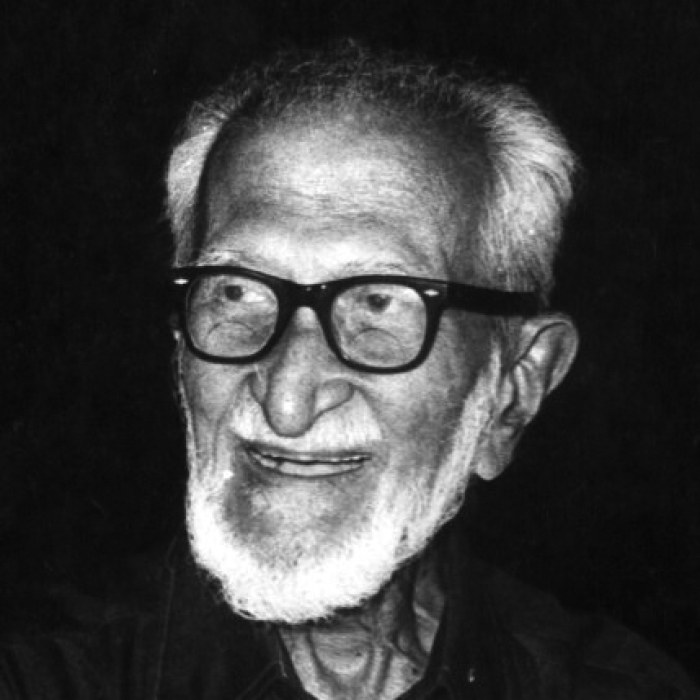
Salim Ali
An orphan who shot a sparrow, asked what it was, and became the birdman of India
Salim Ali was born in Bombay in 1896, the youngest of nine children. His father died when he was one and his mother when he was three; an uncle and aunt brought him up. When he was about ten he shot a sparrow with an unusual yellow patch on its throat, and his uncle took him to the Bombay Natural History Society to have it identified. The curator, an Englishman named Millard, showed him drawers of specimens and lent him books.
Nothing after that went smoothly. He was poor at mathematics and did not complete a university degree. He was sent to Burma to help with the family's tin-mining and timber business, which failed, and he spent as much time as he could in the forest. Back in India he could not get a job with the zoological survey without qualifications, and worked as a guide at a museum for a small salary.
In 1929 he went to Berlin to learn ornithology properly, and came back to a country with no post for him. So he made his own work, persuading the rulers of princely states to fund bird surveys of their territories. He walked and camped for years, often with his wife Tehmina, whose death in 1939 left him alone with the birds.
The Book of Indian Birds came out in 1941 and has never been out of print. He went on to a ten-volume handbook, helped save the Bharatpur marshes and the Silent Valley forest, and died in 1987, aged 90.