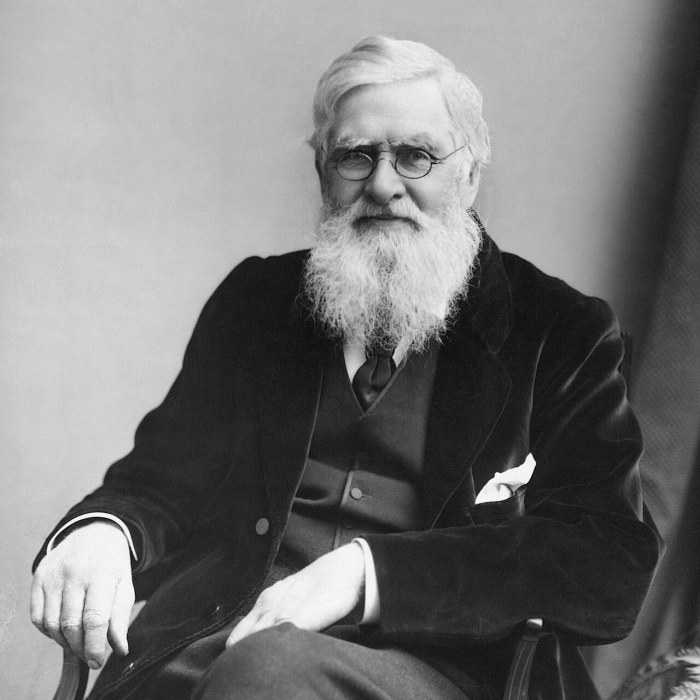
Alfred Russel Wallace
Lost four years of specimens in a fire at sea, went back out, and found natural selection in a fever
Alfred Russel Wallace was born in 1823 in Usk, Monmouthshire, the eighth of nine children in a family whose money was running out. He left school at 14 and worked with his brother as a land surveyor, walking the countryside and teaching himself botany from a sixpenny pamphlet. In Leicester he met the young naturalist Henry Walter Bates, and the two hatched a plan to pay for a scientific life by collecting specimens in the tropics and selling them to museums and collectors.
They sailed for the Amazon in 1848. Wallace spent four years there, mapping rivers and gathering thousands of birds and insects. On the way home in 1852 his ship caught fire and sank. He spent ten days in an open boat and lost almost everything: specimens, notes and drawings. He was 29, and had to start again.
Two years later he left for the Malay Archipelago, where he spent eight years and collected more than 125,000 specimens. In 1858, on the island of Ternate, shivering with malaria, he thought of Malthus and saw how competition for survival would shape species over time. He wrote it up in a few days and sent it to the one man he knew would understand: Charles Darwin. Darwin, who had been sitting on the same idea for twenty years, was appalled, then honourable. The two were presented together to the Linnean Society that July.
Wallace never had a salary or a university post, and was rescued from poverty in his fifties by a government pension Darwin helped arrange. He died in 1913, aged 90.