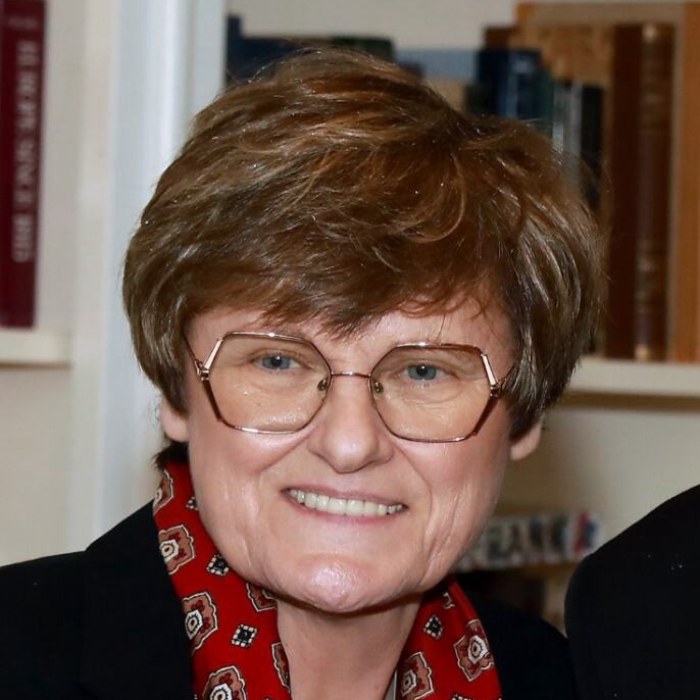
Katalin Karikó
Demoted, denied grants and nearly deported, she kept faith with the idea behind mRNA vaccines
Katalin Karikó grew up in Kisújszállás, a small town on the Hungarian plain, in a house of clay and reeds with no running water. Her father was a butcher. She did well at school, took a doctorate at the University of Szeged and began working on messenger RNA, the molecule that carries instructions from genes to the cell's protein factories. In 1985 her lab lost its funding. She, her husband and their two-year-old daughter left for America with the proceeds of selling their car, about 900 pounds, sewn into the child's teddy bear.
At the University of Pennsylvania in the 1990s she pursued a stubborn idea: that synthetic mRNA could be injected into the body to make it produce its own medicines. Grant applications were rejected one after another. In 1995 she was demoted and had her salary cut, the same year she was diagnosed with a cancer scare and her husband was stuck in Hungary over a visa problem. She stayed.
The central problem was that injected mRNA set off a violent immune reaction. With the immunologist Drew Weissman, whom she met at a photocopier in 1997, she found that swapping one of the molecule's building blocks for a slightly modified version calmed the reaction. Their 2005 paper attracted little interest. Penn licensed the patent away.
She moved to BioNTech in Germany in 2013. When the pandemic came, the modified mRNA she and Weissman had developed was the basis of the Pfizer-BioNTech and Moderna vaccines. In 2023 they shared the Nobel Prize in Physiology or Medicine.