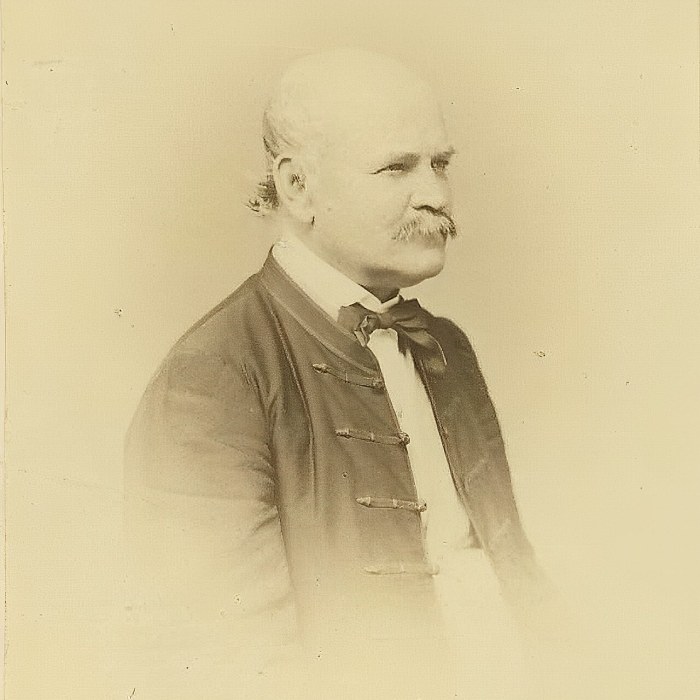
Ignaz Semmelweis
Told doctors to wash their hands and was driven out of the profession for it
Ignaz Semmelweis was born in Buda in 1818, the son of a grocer, and trained as a doctor in Vienna. In 1846 he became an assistant in the maternity clinic of the Vienna General Hospital, which had two wards. In the one staffed by doctors and medical students, around one mother in ten died of childbed fever. In the one run by midwives, the figure was a fraction of that. Women begged to be admitted to the midwives' ward, and some preferred to give birth in the street.
In 1847 a colleague died after being accidentally cut with a scalpel during a post-mortem, with symptoms identical to childbed fever. Semmelweis saw the connection: doctors were coming straight from dissecting corpses to examining women in labour, carrying something on their hands. He ordered everyone to wash in chlorinated lime before entering the ward. Within months the death rate fell to about one per cent.
This was 15 years before Pasteur showed that germs cause disease, and Semmelweis could not explain why it worked. Senior doctors were offended by the implication that they were killing their patients. His position was not renewed in 1849 and he returned to Hungary, where he introduced the same measures at a hospital in Pest with the same results.
He grew bitter and obsessive, publishing open letters that called leading obstetricians murderers. In 1865 he was lured to an asylum in Vienna and beaten by guards when he tried to leave. He died two weeks later of an infected wound, aged 47.