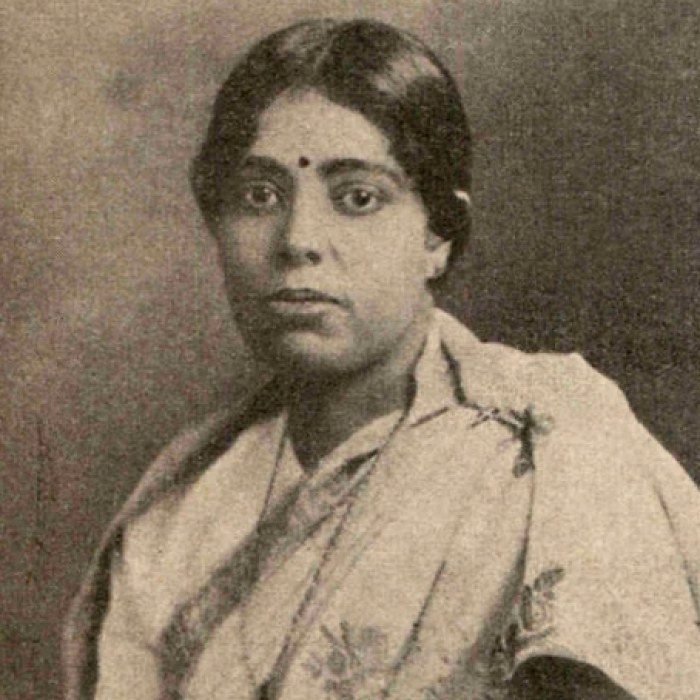
Janaki Ammal
Bred sweeter sugarcane for India, mapped the chromosomes of garden plants, and fought to save a rainforest
Edavaleth Kakkat Janaki Ammal was born in 1897 in Tellicherry, on the Malabar coast, one of many children of a judge who kept a garden and corresponded with naturalists. Her family belonged to a community with mixed-caste origins, and she grew up aware of it. Girls were expected to marry; she did not, and went instead to college in Madras to study botany.
A scholarship took her to the University of Michigan, where she completed a doctorate in 1931, the first Indian woman to earn one in botany there. Back in India she joined the Sugarcane Breeding Institute at Coimbatore, where the aim was a cane that would grow well in Indian conditions and be sweet enough to compete with imported varieties. Her work on crossing sugarcane with related grasses helped produce it. Colleagues did not always treat her well, and in 1940 she left for England.
She spent the war years at the John Innes Horticultural Institution, working with the geneticist Cyril Darlington on chromosome counts, and together they published the Chromosome Atlas of Cultivated Plants in 1945. After that she was cytologist at the Royal Horticultural Society at Wisley, where a magnolia she bred still carries her name.
In 1951 Nehru asked her to come home and reorganise the Botanical Survey of India. In her seventies she joined the campaign that stopped a dam flooding the Silent Valley rainforest in Kerala. She died in 1984, still working.