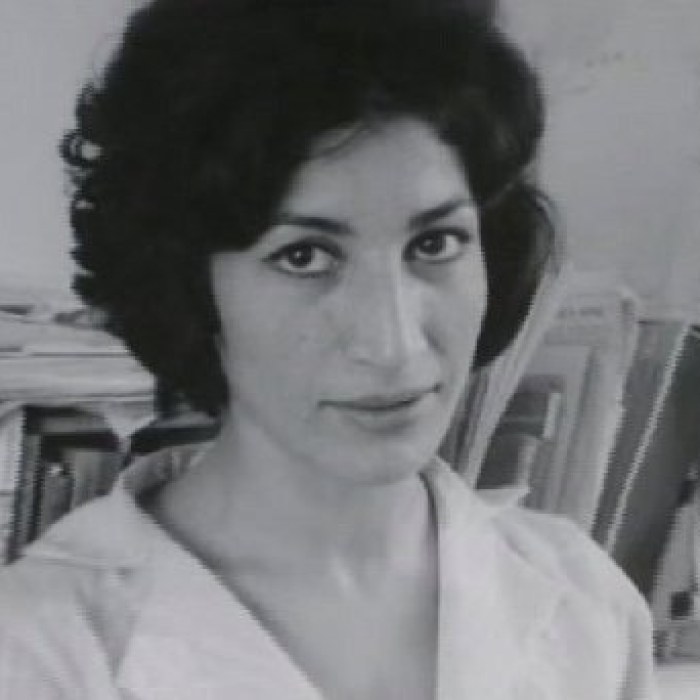
Forough Farrokhzad
Divorced and hospitalised in her teens, she became Iran's most daring modern poet and a filmmaker
Forough Farrokhzad married at sixteen, against a backdrop of a conservative military family, and had a son within the first year. The marriage collapsed within a few years, and under Iranian law of the time custody of the boy went to her former husband's family, a loss she never stopped writing about. The separation and its aftermath brought on a period of severe depression that led to a brief psychiatric hospitalisation.
She began publishing poetry in her late teens and early twenties that broke sharply with the formal conventions of classical Persian verse, writing openly in the first person about desire, doubt and a woman's inner life in ways that scandalised much of literary Iran. Collections such as The Wall and Rebellion made her a controversial, widely read figure while she was barely into her twenties.
In the early 1960s she turned to filmmaking, directing The House Is Black, a short documentary shot in a leper colony that combined unflinching imagery with her own poetic narration. It won prizes internationally and is regarded as a founding work of the Iranian New Wave; while making it she also adopted a child from the colony whose parents had leprosy.
Farrokhzad died in a car accident in Tehran in 1967 at thirty two. Her poetry was suppressed for years after the 1979 revolution but remains among the most influential in modern Persian literature.