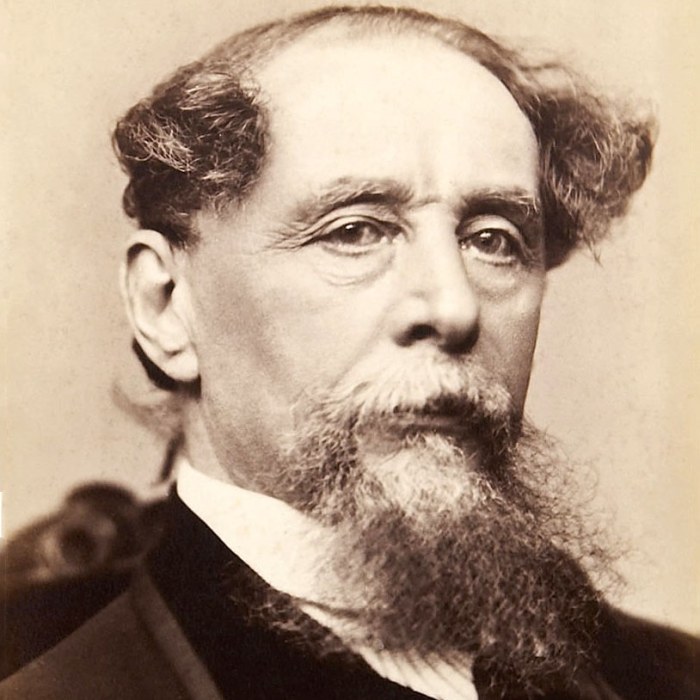
Charles Dickens
Pasted labels on bottles in a rat-infested factory at 12 and kept the secret for the rest of his life
Charles Dickens was a bright, bookish boy whose father, a naval clerk, could never live within his means. In 1824 John Dickens was sent to the Marshalsea debtors' prison, and twelve-year-old Charles was put to work in a boot-blacking factory by the Thames, pasting labels on pots for ten hours a day for six shillings a week. He lodged alone, walked to visit his family in prison on Sundays and was mocked by the other boys. He never forgot it and never spoke of it, telling only one friend, who revealed it after his death.
He left school for good at fifteen and worked as a solicitor's clerk, then taught himself shorthand and became a parliamentary reporter with a reputation for speed and accuracy. Comic sketches published under the name Boz led to The Pickwick Papers in 1836, issued in monthly parts, which turned him at 24 into a celebrity.
He wrote fifteen novels and hundreds of shorter pieces, almost all in serial form with deadlines every month, and never lost his feeling for the workhouse, the prison, the child labourer and the debtor. Alongside the writing he founded a home for women leaving prostitution and campaigned on sanitation and schooling.
In his last years he toured Britain and America giving readings that exhausted him; a doctor warned him to stop. He died of a stroke in 1870, aged 58, leaving The Mystery of Edwin Drood unfinished.