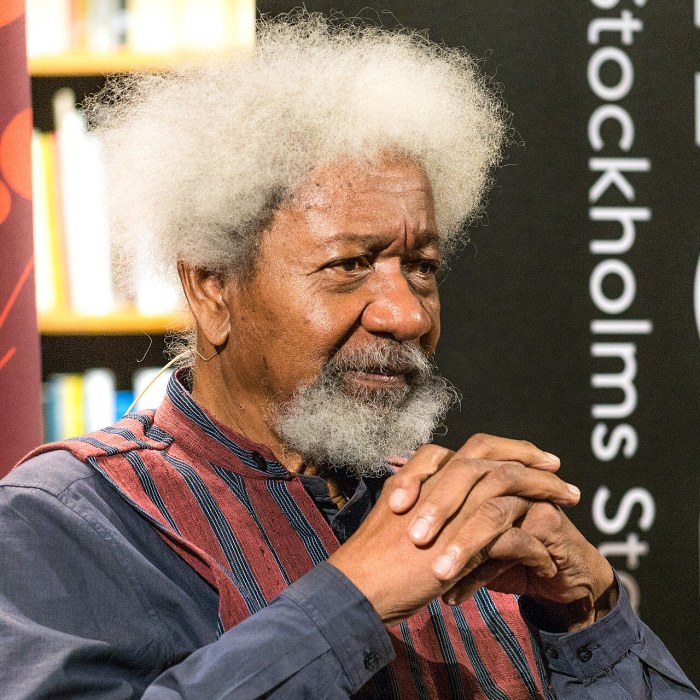
Wole Soyinka
Wrote on toilet paper in solitary confinement and became Africa's first Nobel laureate in literature
Wole Soyinka grew up in Abeokuta in western Nigeria, the son of a headmaster and a shopkeeper who organised women in a tax revolt. He studied at Ibadan and then Leeds, worked as a play reader at the Royal Court in London, and came home in 1960 as the country became independent, writing plays that mixed Yoruba ritual with satire at the new elite.
In 1965 he walked into a radio station in Ibadan with a pistol and swapped the tape of a regional premier\'s victory speech, after a fraudulent election, for one calling him a liar. He was charged and acquitted. Two years later, as civil war broke out over Biafra, he tried to broker a ceasefire and was arrested by the federal government. He spent twenty-two months in detention without trial, most of it in solitary confinement, writing between the lines of books and on toilet paper, cigarette packets and scraps smuggled in. The result was the prison memoir The Man Died.
He won the Nobel Prize in 1986, the first African to do so. In 1994, under the dictatorship of Sani Abacha, he escaped across the border on a motorcycle; three years later the regime charged him with treason in his absence, a capital offence. He returned after Abacha died.
Now in his nineties, he still teaches, publishes and quarrels publicly with Nigerian governments, and remains one of the few people willing to say the same things at home that he says abroad.