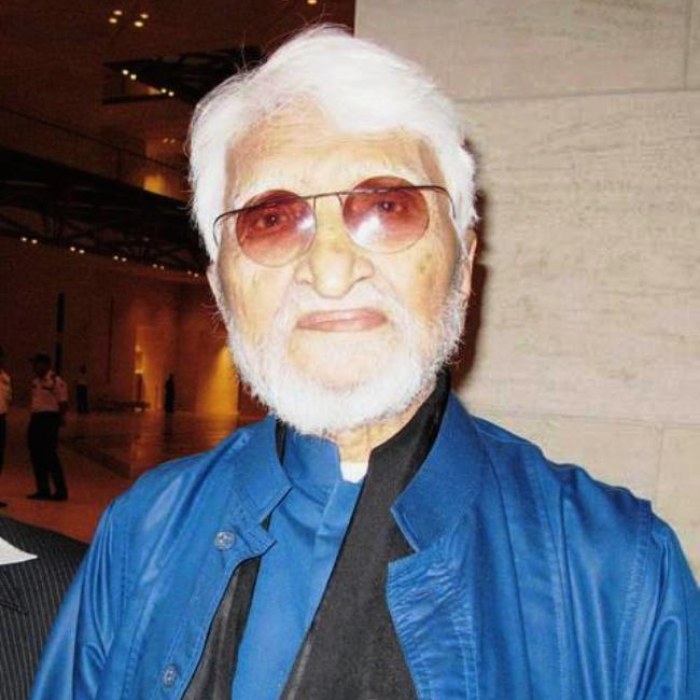
M. F. Husain
Painted cinema hoardings for pennies in Bombay and became India's most famous painter, then died in exile
Maqbool Fida Husain was born in Pandharpur in Maharashtra and lost his mother before he was two. He grew up in Indore, where his father worked in a textile mill, and learned calligraphy and drawing from whoever would teach him. In 1937 he arrived in Bombay with almost nothing and found work painting cinema billboards, paid a few annas per square foot, sleeping on the pavement between jobs. He also designed toys and furniture to get by, and painted in the hours that were left.
In 1947, the year of independence, he joined the Progressive Artists\' Group with Souza and Raza, painters determined to make an art that was modern and Indian at once. His pictures, big, rapid and bright, full of horses, village women, gods and Mother Teresa, were everywhere within twenty years. He walked barefoot in public all his life, made films, one of which won a prize at Berlin, and worked with an energy that produced tens of thousands of paintings.
In the 1990s Hindu nationalist groups began to attack a small number of his older works depicting goddesses in the nude. Galleries were ransacked, exhibitions cancelled and hundreds of criminal cases filed against him across the country. In 2006, at 90, he left India, moving between Dubai and London, and in 2010 accepted Qatari citizenship. He said he wanted to come home. He died in London in 2011, aged 95, still painting most days.