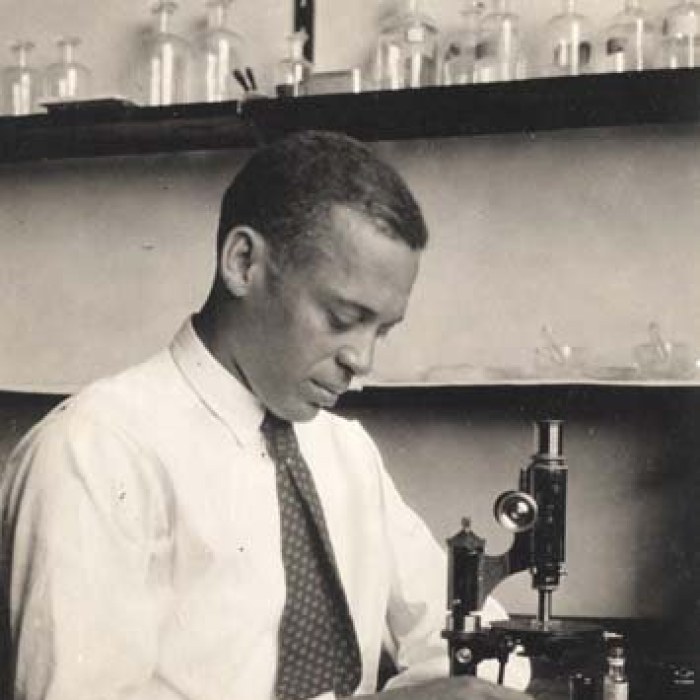
Ernest Everett Just
A brilliant biologist no American university would hire, so he did his best work in Europe
Ernest Everett Just was born in Charleston, South Carolina, in 1883. His father died when he was four. His mother taught school, worked in the phosphate fields, and eventually founded a small township for Black families. She saw that he was clever and, when he was 16, sent him north to a New Hampshire academy. He went on to Dartmouth, where he was the only Black student in his year and graduated in 1907 with the highest honours in biology and history.
The only job open to him was at Howard University, a Black institution in Washington, where he taught heavy loads for the rest of his American career. In summers he went to the Marine Biological Laboratory at Woods Hole and studied the eggs of marine worms and sea urchins, becoming an expert on what happens in the first seconds after a sperm enters an egg. He took a doctorate at Chicago in 1916 and was awarded the first Spingarn Medal for achievement by an African American.
No white university would give him a research post. From 1929 he went to Europe whenever he could raise the money: to Naples, to the Kaiser Wilhelm Institute in Berlin, to Paris. He was treated as a colleague there, and he wrote his major book, The Biology of the Cell Surface, arguing that the surface of a cell mattered as much as its nucleus.
In 1940 the German army reached France and he was briefly interned. He came home ill, and died of cancer in 1941.