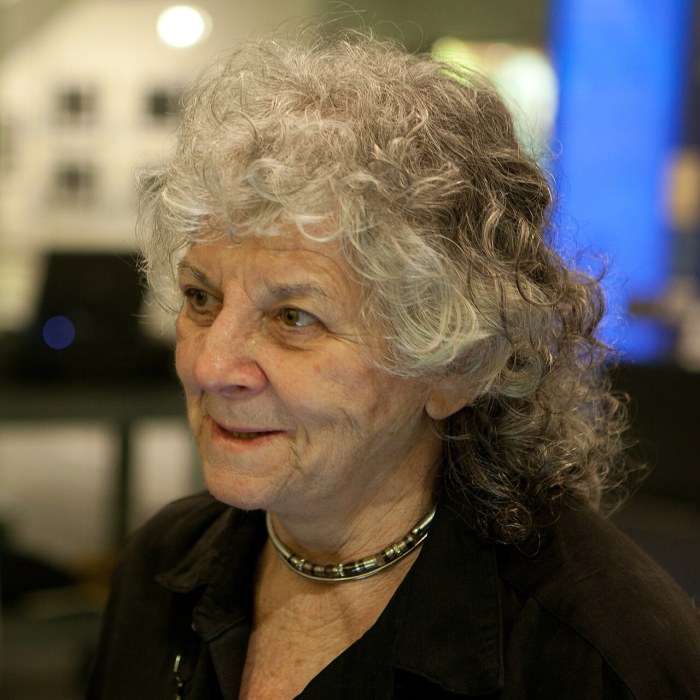
Ada Yonath
Called a dreamer for trying to map the ribosome, she spent twenty years proving it could be done
Ada Yonath was born in Jerusalem in 1939 to parents who had emigrated from Poland. Her father, a rabbi, ran a small grocery, and the family of three shared a rented flat with two other families. She was curious about everything, and at five broke her arm trying to measure the height of the balcony. Her father died when she was 11. She tutored younger children and cleaned to help her mother make ends meet, and the family moved to Tel Aviv so her mother could be near her sisters.
She studied chemistry at the Hebrew University and took a doctorate at the Weizmann Institute, followed by research in America. In the 1970s she set up the first protein crystallography laboratory in Israel, working in a room of her own with almost no equipment.
Her target was the ribosome, the machinery inside every cell that reads genetic instructions and builds proteins. It was huge, floppy and had never been crystallised. For years the wider field regarded the attempt as hopeless; she has said she was called a dreamer and, less kindly, the village fool. Her first usable crystals came from bacteria that live in hot springs and the Dead Sea, and she pioneered the technique of freezing crystals to stop X-rays destroying them. Both are now standard.
The full structure emerged around 2000, showing how antibiotics jam the ribosome and how bacteria become resistant. In 2009 she shared the Nobel Prize in Chemistry, the first woman to win it since Dorothy Hodgkin in 1964.