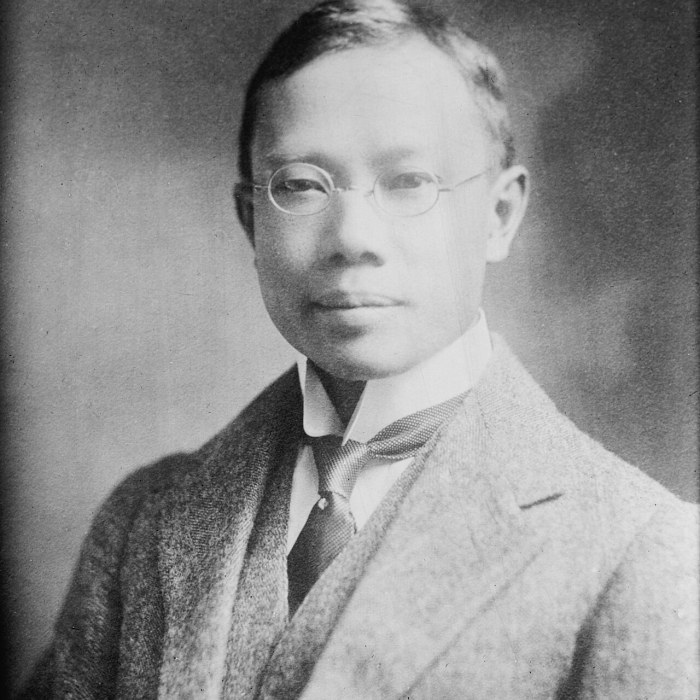
Wu Lien-teh
Stopped a plague that was killing everyone it touched, by insisting that doctors wear masks
Wu Lien-teh was born in Penang in 1879, the son of a Chinese goldsmith. He won a scholarship that took him to Cambridge, where he was the first Chinese student to study medicine, and he qualified in 1903. Back in Malaya he found that as a Chinese doctor he was paid less than European colleagues and kept from senior posts, and he campaigned against the opium trade, which made him enemies. In 1908 he took a job in China.
In December 1910 he was sent north to Harbin, where a pneumonic plague was spreading along the railways and killing almost everyone who caught it. He was 31, spoke little Mandarin and had a single assistant. Within days he carried out a post-mortem, found the plague bacillus in the lungs, and concluded that this form of plague passed directly from person to person in the breath, not through rat fleas as the textbooks said.
He designed a mask of gauze and cotton and told everyone in contact with patients to wear it. A senior French doctor dismissed the idea, refused the mask and died of plague within days. Wu quarantined the city, and, in a step that shocked Chinese custom, got imperial permission to cremate thousands of unburied bodies. By March 1911 the epidemic was over. Around 60,000 people had died.
He built China's first modern public health service, was nominated for a Nobel Prize in 1935, and after the Japanese invasion returned to Malaya as a country doctor. He died in Penang in 1960.