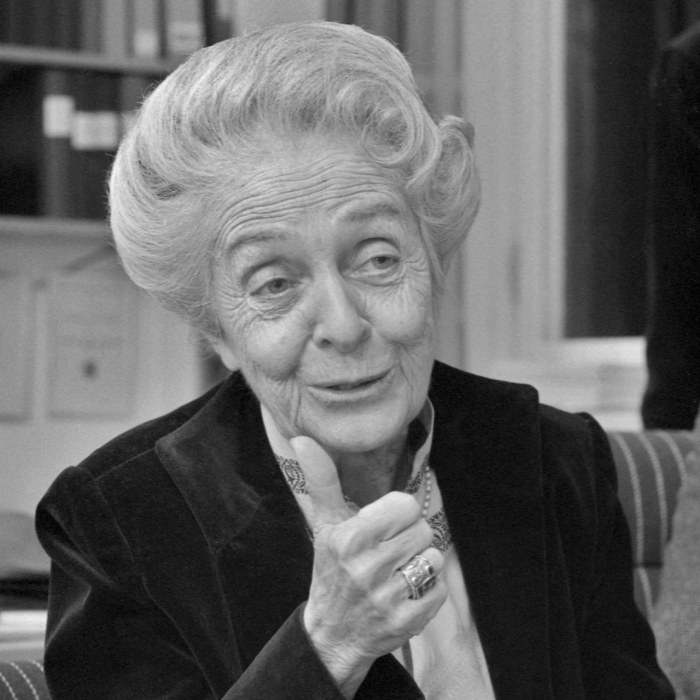
Rita Levi-Montalcini
Barred from her university by fascist race laws, she built a lab in her bedroom
Rita Levi-Montalcini was born in Turin in 1909 to a Jewish family. Her father, an engineer, believed a professional career would interfere with a woman's duties as a wife and mother, and would not let his daughters go to university. It took her until she was 20, and the death of a beloved governess from cancer, to persuade him. She qualified in medicine in 1936 and began research into how nerve cells develop.
In 1938 Mussolini's racial laws barred Jews from academic and professional life. She was dismissed from the university. Rather than stop, she set up a laboratory in her bedroom: a microscope, a home-made incubator, and surgical tools improvised from sewing needles ground to a point. She bought fertilised eggs from farmers, studied the growth of nerves in chick embryos, and then ate the eggs. When Allied bombing forced the family to the countryside, the laboratory moved with her.
After the war Viktor Hamburger invited her to Washington University in St. Louis for one semester. She stayed 30 years. With the biochemist Stanley Cohen she isolated nerve growth factor, a protein that tells nerve cells to grow and survive. It was the first of a whole class of signalling molecules to be found, and it changed how biologists think about how the body builds itself.
She and Cohen shared the Nobel Prize in Physiology or Medicine in 1986. She was made a senator for life in Italy in 2001 and was still going to her institute in her hundreds. She died in Rome in 2012, aged 103.