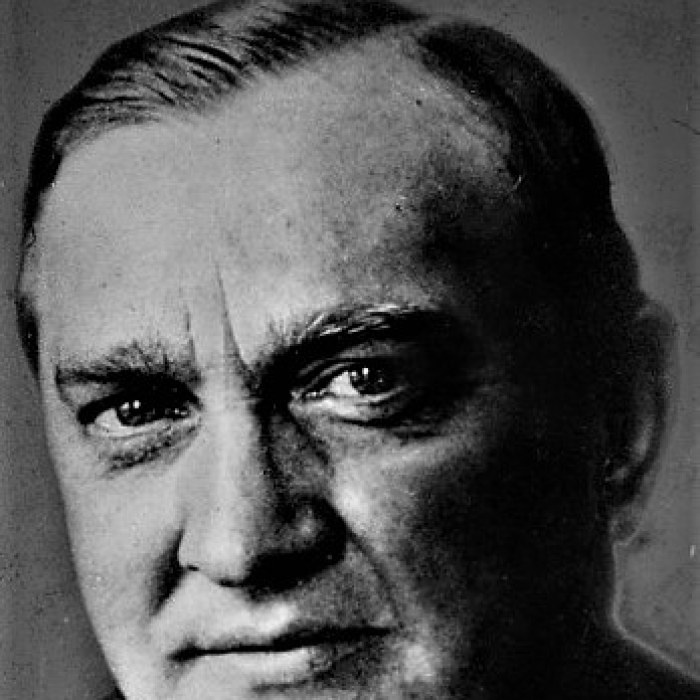
Stefan Banach
Did some of his most important mathematics at a café table, and never finished a formal degree
Stefan Banach was born in 1892 in Kraków, in what was then Austrian-controlled Poland, and grew up largely without his parents, raised by a laundress who took him in as a boarding child. He was mathematically gifted but had no formal path into higher education, drifting between technical studies and self-directed reading rather than completing a conventional degree.
In 1916 the mathematician Hugo Steinhaus overheard Banach and a friend discussing advanced mathematical concepts on a park bench in Kraków and, astonished at the depth of the conversation, introduced himself. The encounter changed Banach's life: Steinhaus brought him into academic mathematics, and the two later published work together despite Banach still lacking a completed degree.
Banach went on to hold a professorship at Lwów Polytechnic and became the central figure of what became known as the Lwów School of Mathematics, a group of researchers who famously conducted much of their work at the Scottish Café, recording problems and results directly onto the marble tabletops or in a notebook kept at the café. His own major contribution, the theory of what are now called Banach spaces, became a foundation of functional analysis, an area of mathematics essential to modern physics and engineering.
The Second World War devastated the school; Banach survived by working as a lice feeder at Rudolf Weigl's typhus institute, one of the few jobs the Nazi occupation allowed. He died of lung cancer in 1945, shortly after the war ended.