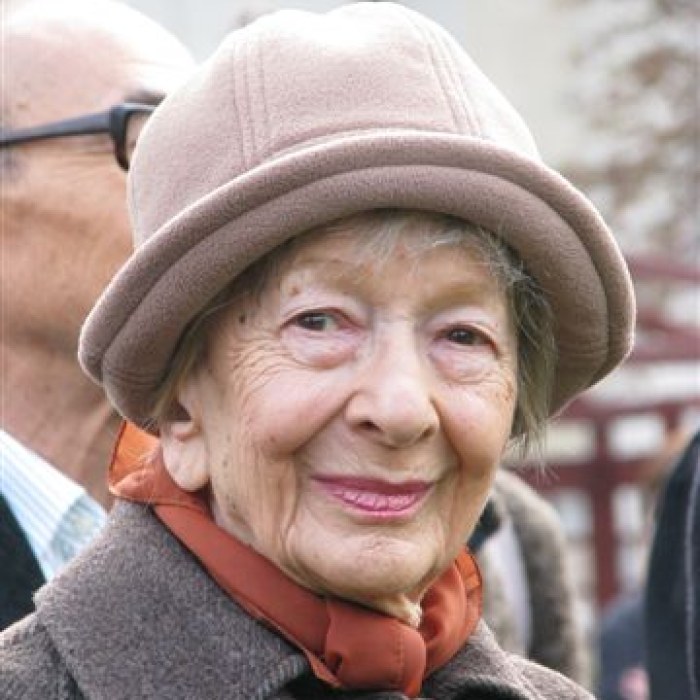
Wisława Szymborska
Her first book was blocked by the censors and she disowned her second, then wrote 350 poems that won the Nobel
Wisława Szymborska was born near Poznań and moved to Kraków with her family at eight; she lived in the city for the rest of her life. She studied Polish literature and sociology after the war without finishing a degree, worked as an illustrator and editor, and published her first poem in a newspaper in 1945. Her first collection was ready by 1949, but the censors rejected it for failing to meet the needs of socialism.
The book that did appear, in 1952, was written to those needs, with poems in praise of Lenin and reconstruction. She later refused to have them reprinted and was blunt about having believed in something that turned out to be a lie. From 1957, with Calling Out to Yeti, she found her own voice: dry, curious, sceptical, using everyday words to ask why anything exists at all. She left the Communist Party in 1966 and quietly supported dissident writers thereafter.
She wrote slowly, kept a wastepaper basket by the desk and said it was the most important piece of furniture in the room. In fifty years she let about 350 poems into print. She was little known outside Poland when the Nobel committee chose her in 1996, and she was so overwhelmed by the attention that her friends referred to it as the Nobel catastrophe; she stopped writing for two years.
She spent the rest of her life in a small flat, making collages for friends and avoiding interviews, and died in 2012, aged 88.