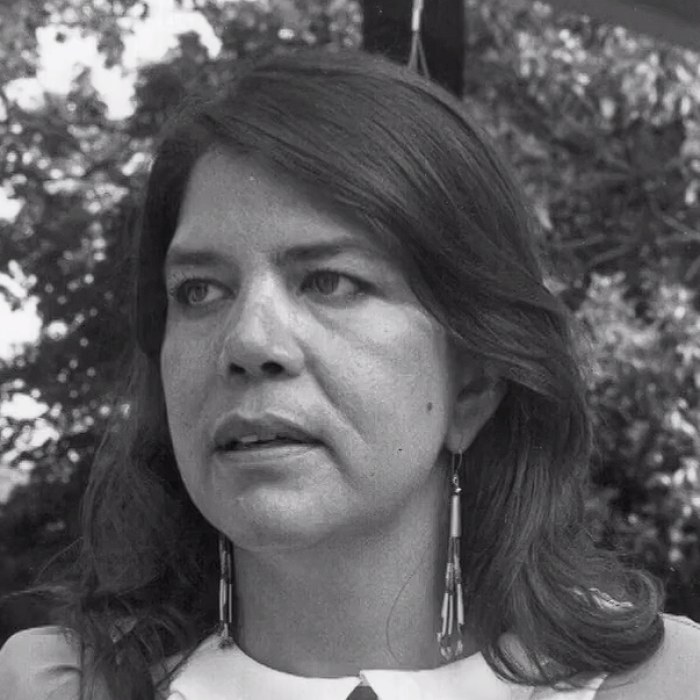
Wilma Mankiller
First woman elected principal chief of the Cherokee Nation, rebuilding it after decades of decline
Wilma Mankiller was born in rural Oklahoma and was ten when her family was moved to San Francisco under a federal programme meant to relocate Native Americans into cities and away from reservation land, a policy she later described as her own personal Trail of Tears. In the Bay Area she was drawn into the Native American rights movement, including the 1969 occupation of Alcatraz Island by Indigenous activists, an experience that pushed her toward community organising.
She returned to Cherokee Nation land in Oklahoma in the 1970s and began working on rural development projects, an approach that nearly ended in 1979 when a head-on collision left her with multiple fractures and years of surgery, followed soon after by a diagnosis of myasthenia gravis and later a kidney transplant. She credited the recovery with strengthening what she called a Cherokee approach to adversity, a stubborn belief in facing hardship rather than being defeated by it.
In 1985 she became principal chief of the Cherokee Nation, the first woman to hold the position in modern times, after her predecessor resigned; she was elected in her own right in 1987 despite death threats and slashed car tyres, and re-elected in 1991 with 83 percent of the vote. She rebuilt the nation's health and infrastructure programmes and doubled tribal enrollment.
She stepped down in 1995 for health reasons and died in 2010, having been awarded the Presidential Medal of Freedom in 1998.