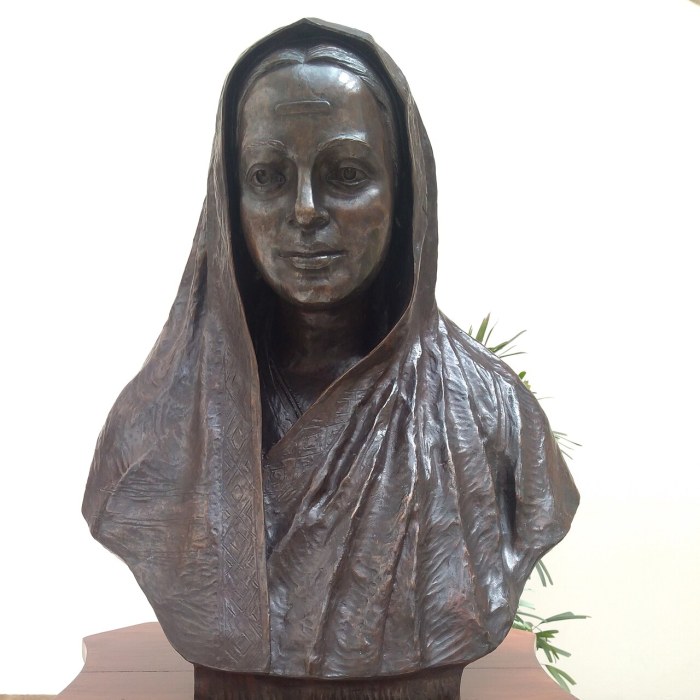
Savitribai Phule
Walked to her girls' school through hurled dung and stones, carrying a spare sari to change into
Savitribai was born in a village in what is now Maharashtra and married at the age of nine to Jyotirao Phule, who was thirteen. Neither could read. Jyotirao learned, and taught her at home, and she went on to train as a teacher at a time when the education of girls, especially girls from lower castes, was treated as an outrage.
In 1848 the couple opened a school for girls in Pune, and she became its teacher. On her way there people threw stones, mud and cow dung at her and shouted abuse, so she carried a second sari and changed when she arrived. Jyotirao's father, under pressure from the community, turned them out of the family home. They opened more schools, and by the early 1850s were running several, along with night classes for working adults.
She saw that widows, forbidden to remarry and often abused, sometimes killed themselves or their babies when they became pregnant, and in 1863 the Phules opened a home where such women could give birth safely. They adopted one of the children born there, a boy named Yashwant, and raised him to be a doctor. In 1873 they founded the Satyashodhak Samaj, a society that rejected priests and caste, and she presided over marriages conducted without Brahmins. When Jyotirao died in 1890 she lit his funeral pyre herself, a thing women did not do, and led the society after him.
In 1897 bubonic plague reached Pune, and she and Yashwant set up a clinic on the outskirts. She caught the disease while carrying a sick child there and died in March that year.