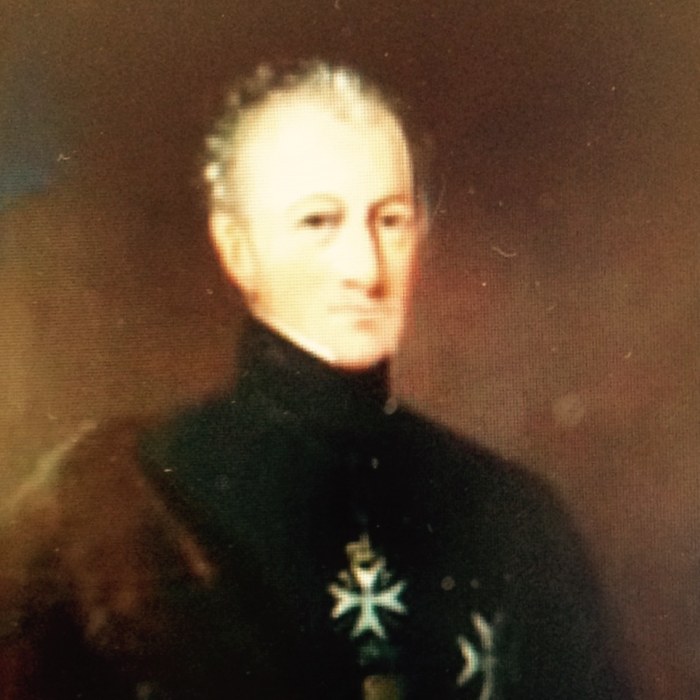
William Hillary
Watched ships break up in Douglas Bay and founded the lifeboat service, then rowed out himself
William Hillary was born into a Yorkshire Quaker family in 1770 and made a poor job of the first half of his life. During the invasion scare of 1803 he raised and equipped a private regiment at his own expense, was made a baronet for it, and was left so deep in debt that he had to leave England. He settled in Douglas on the Isle of Man, where his house looked out over a bay in which ships were wrecked every winter.
He did not just watch. In 1822, when a Royal Navy cutter went aground, he helped organise boats to bring off the crew. Reasoning that what Douglas needed, every coast needed, he wrote An Appeal to the British Nation in 1823 arguing for a national body, funded by subscription, with boats and trained crews at every dangerous point on the coast, to save lives regardless of nationality. He kept writing to anyone who might be, and in March 1824 a meeting at the London Tavern founded the National Institution for the Preservation of Life from Shipwreck, later renamed the Royal National Lifeboat Institution.
He never stopped going out himself. In 1830, aged sixty, he helped rescue the crew of the packet St George, was washed overboard and broke six ribs. He won the institution's gold medal several times and paid for a tower of refuge on Conister Rock for shipwrecked sailors to shelter in.
He died in Douglas in 1847, still in debt, and was buried there.