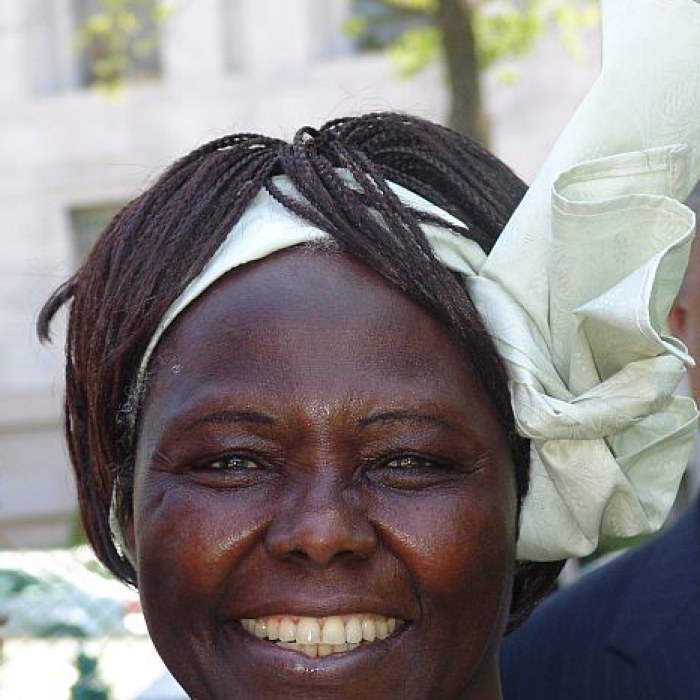
Wangari Maathai
Planted 50 million trees and became the first African woman to win the Nobel Peace Prize
Wangari Maathai grew up in the central highlands of Kenya and won a scholarship to study in the United States, then returned home to become the first woman in East and Central Africa to earn a doctorate. She became a professor of veterinary anatomy at the University of Nairobi and fought, and won, battles over equal pay for women staff.
Talking to rural women in the 1970s she kept hearing the same things: streams drying up, firewood harder to find, soil washing away, children going hungry. The link was deforestation. In 1977 she started the Green Belt Movement, paying women a small amount for every seedling they raised and planted. It grew into a nationwide network that has planted more than 50 million trees.
The movement became political because it had to. Trees were being cut for the benefit of the government's friends, and Maathai organised against land grabs, including a plan to build a skyscraper in Nairobi's Uhuru Park. She was beaten by police, arrested repeatedly, and publicly called a mad woman by President Moi.
When Kenya returned to multi-party democracy she was elected to parliament with 98 per cent of the vote and became a deputy environment minister. In 2004 she won the Nobel Peace Prize, the first African woman and the first environmentalist to do so. She died of cancer in 2011, and her funeral casket was made of woven papyrus rather than wood.