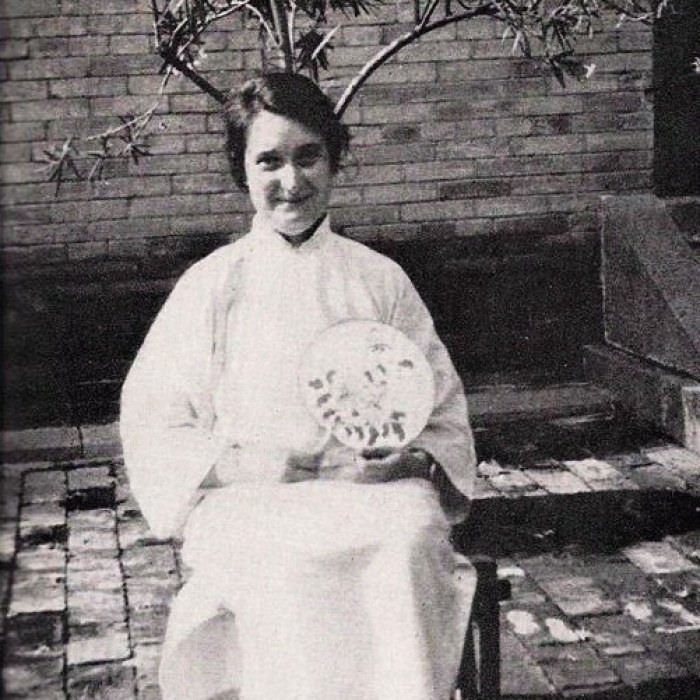
Gladys Aylward
A London parlourmaid rejected by the missions who led a hundred children across the mountains of China
Gladys Aylward left school early and went into domestic service in London. In her twenties she decided she wanted to go to China as a missionary, but the China Inland Mission rejected her after a probationary term, judging her too old to learn the language. She kept working as a parlourmaid and saved her wages.
In 1932 she bought a railway ticket across Siberia, the cheapest route, and set off alone with a suitcase and a few pounds. The line ran into a war zone between the Soviet Union and China; she was taken off the train and had to walk back along the track through the night before finding a way round by sea. She arrived in the mountain town of Yangcheng in Shanxi to join an elderly Scottish missionary, Jeannie Lawson, and the two women opened an inn for muleteers where they told Bible stories after supper.
Lawson died within a year. Aylward stayed, learned the dialect, and was appointed by the local mandarin as the town's foot inspector, enforcing the ban on binding girls' feet. She took in orphans and became a Chinese citizen in 1936.
When the Japanese army bombed and occupied the region she led about a hundred children on foot over the mountains and across the Yellow River to safety in Xi'an, a journey of weeks on almost no food. She arrived delirious with typhus and relapsing fever. The 1958 film The Inn of the Sixth Happiness made her famous, though she disliked its inventions. She died in Taiwan in 1970, running an orphanage.