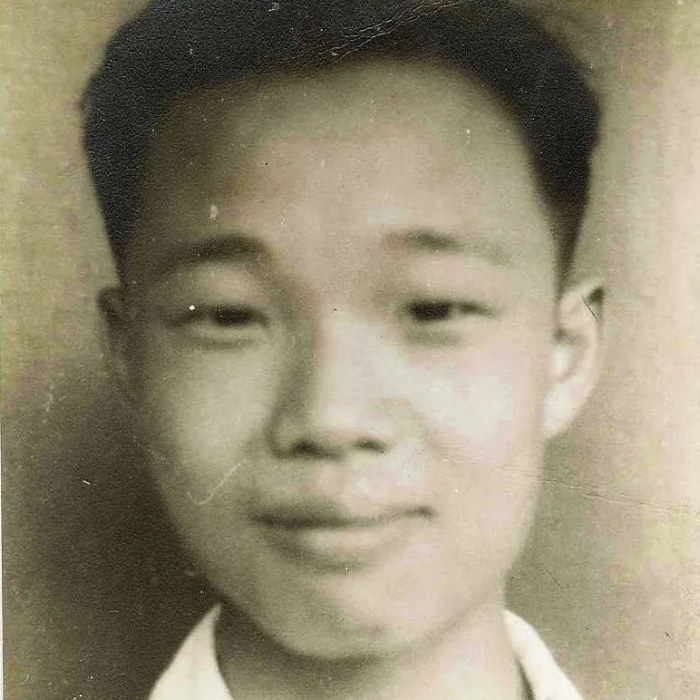
Wang Zhenyi
Used a lamp, a mirror and a round table to work out why the moon goes dark
Wang Zhenyi was born in 1768 in Jiangning, in Qing dynasty China, into a family of scholars and officials. Her grandfather owned an extensive library, and after his death she spent years reading through his books on astronomy and mathematics, subjects almost entirely closed to women of her time, who had no access to formal scientific education or official academies.
Working largely alone, she devised a home experiment to understand lunar eclipses: she hung a round lamp from the rafters to represent the sun, set a round table to stand in for the earth, and used a mirror as the moon, moving the pieces to work out how the earth's shadow produced an eclipse. Her resulting paper on the subject explained the mechanism with a clarity that matched contemporary astronomical understanding.
She went on to write on the precession of the equinoxes, the motion of planets and trigonometry, and produced simplified versions of complex mathematical texts specifically so that beginners, including other women, could follow them without needing years of prior training few could obtain. She also wrote poetry that touched on the difficulties faced by women seeking education and independence in her society.
She died in 1797 at only 29, having produced more than a dozen books on astronomy and mathematics in a career built almost entirely without institutional support.