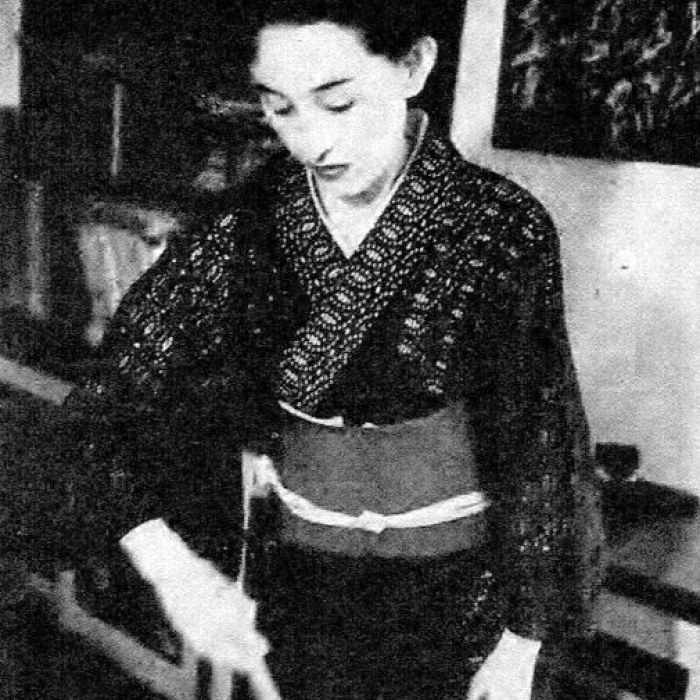
Toko Shinoda
Turned calligraphy into abstract art on her own terms and kept painting until she died at 107
Toko Shinoda was born in 1913 in Dalian, in Japanese-controlled Manchuria, and grew up in Tokyo, where her father, a tobacco merchant and amateur calligrapher, began teaching her to handle a brush at six. Calligraphy in Japan was a strict art of copying masters, and she became good at it. She also found it stifling. In the 1940s, in a country at war and then in ruins, she began to make ink marks that were not characters at all, only strokes.
She never married, which she said was the only way a woman of her generation could be free to work. In 1956, at 43, she went to New York and stayed for two years, showing at the Betty Parsons Gallery alongside the abstract expressionists and finding that her sparse, fast brushwork made sense to them. She came home, however, convinced her art belonged in Japan.
For the next six decades she worked in a small Tokyo flat, grinding her own ink from sticks, some of them a century old, and producing paintings and lithographs of a few decisive strokes, often on gold or silver leaf. Museums in Japan and the West collected her; the public largely discovered her late, when a book of her reflections written at 103 became a bestseller. She was still working in the weeks before she died in 2021, aged 107.