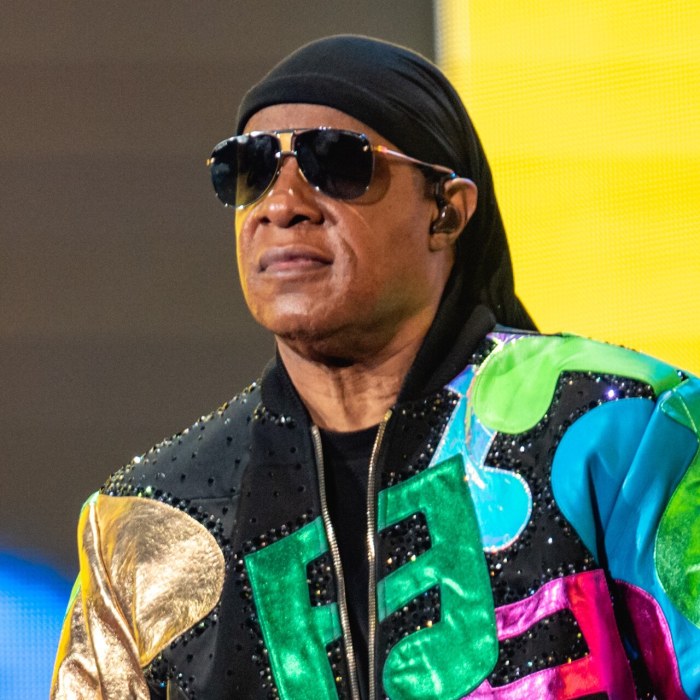
Stevie Wonder
Blind from birth and signed at eleven, he took control of his music at 21 and made his masterpieces
Stevland Morris was born in Saginaw, Michigan, six weeks premature; the oxygen-rich air of the incubator that kept him alive damaged his retinas, and he has been blind since infancy. His mother moved the family to Detroit, and by the age of eight he was playing piano, harmonica and drums and singing in a church choir. A neighbour with a connection to Motown got him an audition at eleven, and the label signed him as Little Stevie Wonder. His live recording of Fingertips reached number one in 1963. He was thirteen.
Motown paid him a small allowance and controlled everything else. Through his teens he had hits, but the songs, the arrangements and the money were the company\'s. When he turned 21 in 1971 his childhood contract expired, and he refused to sign another until he was given control of his publishing and his recordings. He got it, and over the next five years produced Talking Book, Innervisions, Fulfillingness\' First Finale and Songs in the Key of Life, playing most of the instruments himself and writing about racism, drugs, poverty and love with an energy the charts had not heard before.
In August 1973 a log fell from a lorry onto the car he was riding in and he lay in a coma for days with a serious head injury. He recovered, though he lost most of his sense of smell.
He later led the campaign for a national holiday for Martin Luther King, and received the Presidential Medal of Freedom in 2014.