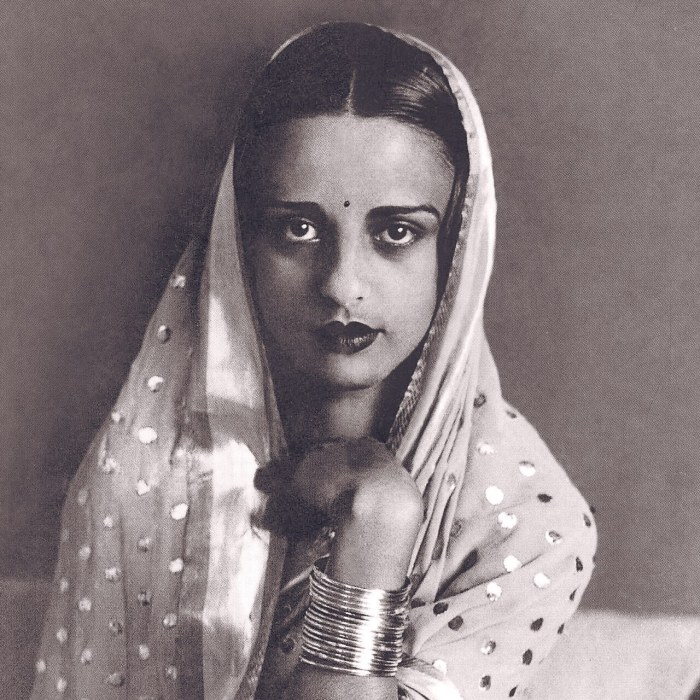
Amrita Sher-Gil
Left Paris success to paint the poor of India and died at twenty-eight, days before her first big show
Amrita Sher-Gil was born in Budapest to a Sikh aristocrat and scholar, Umrao Singh, and a Hungarian opera singer, Marie Antoinette Gottesmann. The family moved to Simla when she was eight. She drew constantly and was expelled from a convent school for declaring herself an atheist. At sixteen she was taken to Paris, where she studied at the École des Beaux-Arts and painted the bohemian life around her with a confidence far beyond her age. In 1933 her canvas Young Girls won a gold medal at the Grand Salon and made her its youngest associate, and the only Asian one.
She could have stayed. Instead, in 1934, she went back to India, saying she felt haunted by it, and began travelling through villages painting the people she found there: labourers, brides, beggars, three girls waiting in a doorway. The pictures were still and unsmiling, flat and rich in colour, drawing on Ajanta murals and Mughal miniatures as much as on Gauguin. Indian critics were baffled and buyers were few. She wrote furious letters about the philistines.
She married her Hungarian cousin, a doctor, in 1938, lived on the family estate in Uttar Pradesh and then moved to Lahore in 1941. There, that December, she fell suddenly ill and died within days. She was 28. The cause was never established. Her first major solo exhibition in the city opened without her, and the government of India later declared her paintings national treasures that may not leave the country.