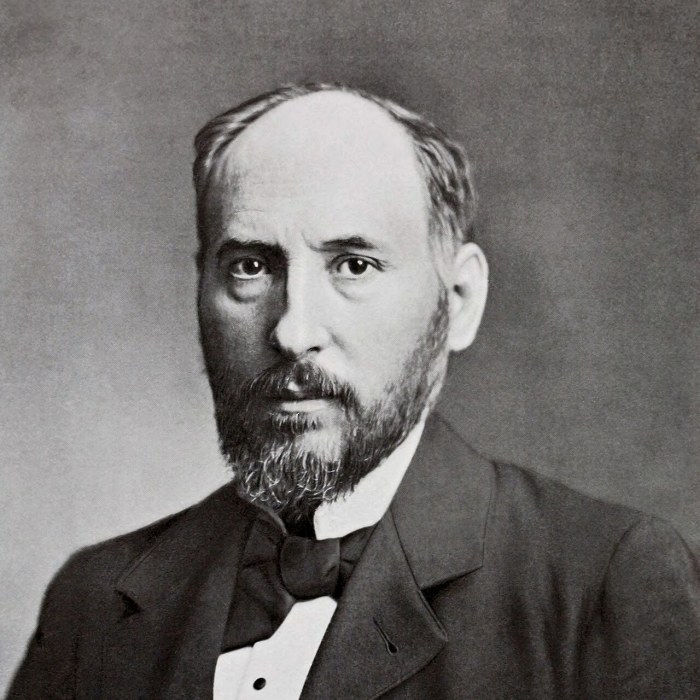
Santiago Ramón y Cajal
A rebellious boy jailed at eleven who drew the brain cell by cell and founded neuroscience
Santiago Ramón y Cajal was born in 1852 in a village in Aragon, the son of a country doctor who later became a professor of anatomy. He was a difficult child: rebellious, moved from school to school, and once jailed for several days at 11 for destroying a neighbour's gate with a home-made cannon. What he wanted to do was draw. His father, who thought art no career, apprenticed him first to a barber and then to a cobbler to teach him discipline.
His father finally won him over to anatomy by taking him to a graveyard to sketch bones. He qualified in medicine at Zaragoza and was conscripted as an army doctor to Cuba, where he contracted malaria and dysentery and came home so weak he was expected to die. He then developed tuberculosis. He recovered, slowly, and turned to microscopy, buying his first microscope with savings and setting it up at home.
In 1887 he was shown a staining method invented by the Italian Camillo Golgi that turned a few nerve cells black against a clear background. Golgi and most others had given up on it as unreliable. Cajal refined it and applied it to the brains of embryos and young animals, where the cells were simpler. What he saw, and drew in thousands of exquisite pen-and-ink studies, was that nerve cells were separate units that communicated across tiny gaps, not a continuous mesh. This became the foundation of modern neuroscience.
He shared the 1906 Nobel Prize with Golgi, who used his acceptance lecture to attack Cajal's ideas. Cajal died in Madrid in 1934.