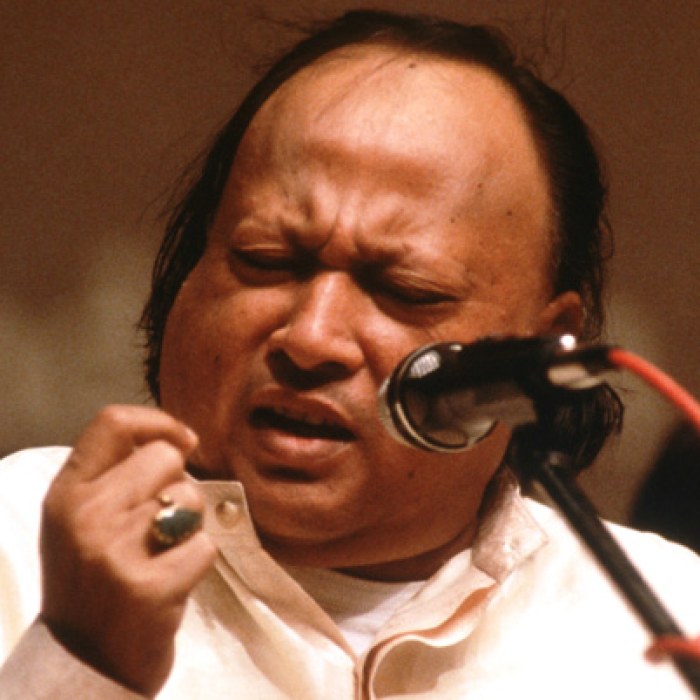
Nusrat Fateh Ali Khan
His father wanted him to be a doctor; instead he carried six centuries of qawwali to the world
Nusrat Fateh Ali Khan was born in Faisalabad, then called Lyallpur, into a family that had sung qawwali, the ecstatic devotional music of the Sufi shrines, for about six hundred years. His father, Fateh Ali Khan, a celebrated qawwal, did not want that life for his son: the pay was poor and the respect uncertain. He wanted him to become a doctor. The boy listened at the door of the rehearsals and picked up the songs anyway.
His father died in 1964, when Nusrat was fifteen. He sang publicly for the first time at the memorial gathering forty days later. He learned under his uncles, and when the second of them died in 1971 he took charge of the family party at 22. He was overweight, short of breath and unmistakable: his voice could hold a note for what seemed like minutes and then leap into improvisations that left audiences at shrines in tears.
For years he was known only in Pakistan and to South Asian communities abroad. In 1985 he played the WOMAD festival in England, and Peter Gabriel signed him to his Real World label. Collaborations with Western musicians followed, along with film soundtracks including Dead Man Walking, and hundreds of recordings; he was credited with more qawwali albums than anyone in history.
Diabetes and kidney disease wore him down. He died in London in 1997 on his way to treatment in America, aged 48.