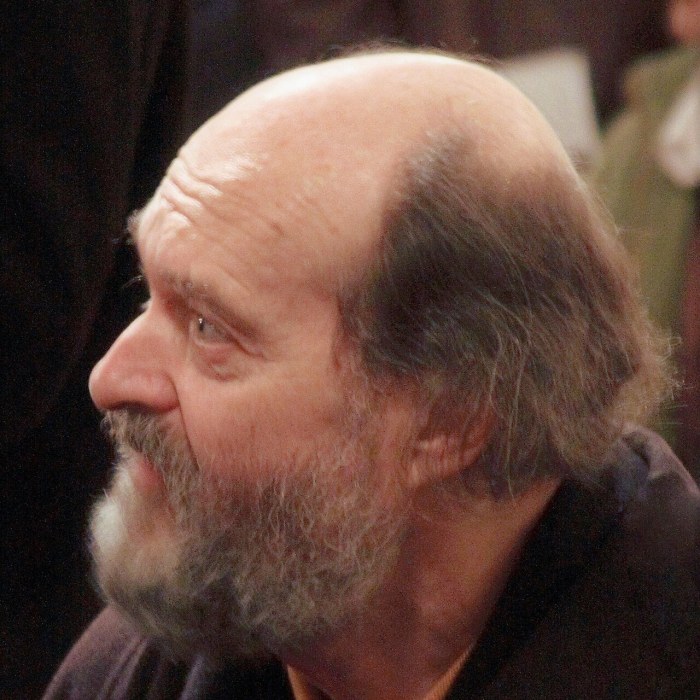
Arvo Pärt
Fell silent for nearly eight years, then returned with a music so simple the censors did not know what to do
Arvo Pärt was born in Paide, a small town in Estonia, and grew up under Soviet rule after the war, practising on a family piano whose middle register was broken so that he composed at the extremes. He studied at the Tallinn Conservatory and paid his way as a sound engineer at Estonian Radio. His early orchestral pieces used serial techniques borrowed from the West, and the first, Nekrolog, was officially condemned in 1960 as a bad influence.
In 1968 he wrote Credo, a work for choir and orchestra that set the words I believe in Jesus Christ, and it was banned outright. He stopped. For almost eight years he wrote nothing he was willing to release, and instead studied Gregorian chant and the early polyphony of Notre Dame, filling notebooks with exercises in how to make two lines of music move together. He also joined the Orthodox Church.
In 1976 he produced a two-minute piano piece, Für Alina, in which a melody and a simple triad chime against each other like bells, and called the method tintinnabuli. Fratres, Tabula Rasa and Spiegel im Spiegel followed within two years. In 1980, with his Jewish wife and their children, he was allowed to emigrate and settled in West Berlin.
The recordings made from 1984 by the ECM label carried the music around the world, and for most of the past two decades he has been the most performed living composer anywhere. He returned to live in Estonia in 2010.