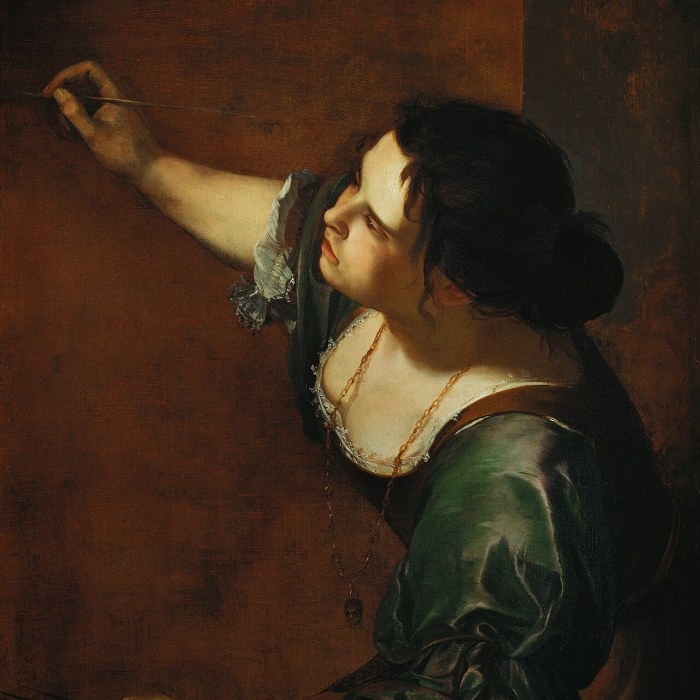
Artemisia Gentileschi
Tortured in court to test her word, she went on to become the most successful woman painter of her age
Artemisia Gentileschi was born in Rome, the daughter of the painter Orazio Gentileschi. Her mother died when she was twelve, and she learned to paint in her father's workshop at a time when women could not join guilds or study from the nude. By seventeen she had completed Susanna and the Elders, a painting still remarkable for showing how it feels to be watched.
In 1611 Agostino Tassi, a painter her father had hired to teach her perspective, raped her. When he failed to marry her, as the customs of the time expected, Orazio brought charges. The seven-month trial of 1612 was an ordeal for the victim rather than the accused: Artemisia was examined by midwives and had thumbscrews tightened on her hands while she repeated her testimony. Tassi was convicted, but his sentence was never carried out.
She married and moved to Florence, where she became the first woman admitted to the Accademia delle Arti del Disegno, won commissions from the Medici, befriended Galileo and painted Judith Slaying Holofernes, a picture of two women calmly beheading a man that has been read ever since as an act of settling accounts.
She later ran her own workshop in Naples and worked briefly in London for Charles I. Her letters to patrons show a businesswoman fighting to be paid the same as men. She died in Naples around 1656.