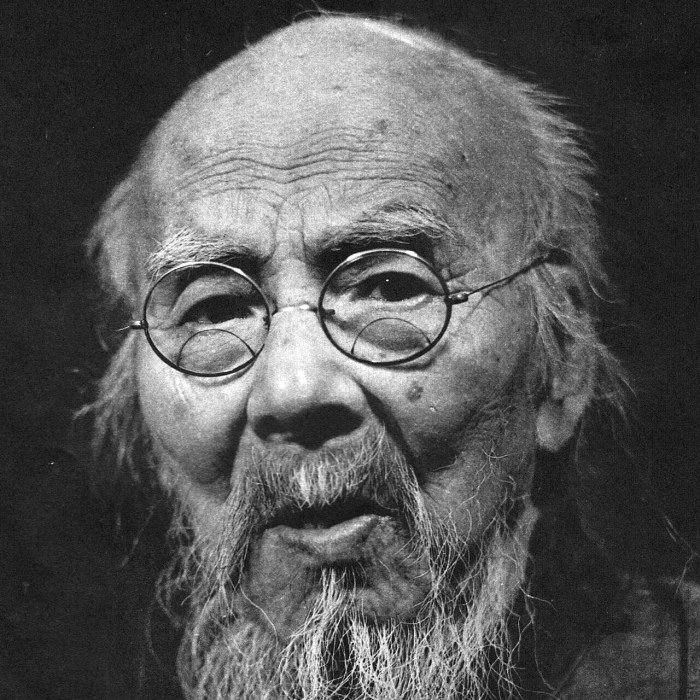
Qi Baishi
A carpenter who taught himself to paint, he was not recognised as a master until his forties
Qi Baishi was born into a poor farming family in Hunan province and had little formal schooling. At fourteen he was apprenticed to a carpenter and spent years as a jobbing woodcarver, decorating furniture with traditional motifs. He taught himself to draw and paint largely by studying a borrowed manual of ink-brush technique, copying it repeatedly in his spare time.
He gradually built a local reputation as a carver and portraitist, but it was not until his late thirties and forties, after years of travel around China studying landscapes and meeting established painters and poets, that he began to develop the direct, economical style that would define his mature work: shrimp, crabs, insects, flowers and vegetables rendered with a few confident strokes, blending the refinement of literati painting with the directness of folk art.
He settled permanently in Beijing in his mid fifties and only then, well past the age at which most artists have made their names, did wider recognition arrive, helped by teaching positions and the support of established critics. His prolific late output, often produced daily into old age, eventually made him one of the best-known painters in twentieth-century China.
In 1953 the new Chinese state named him People's Artist, and in 1956 he received the International Peace Prize. He continued painting almost until his death in 1957, in his early nineties.