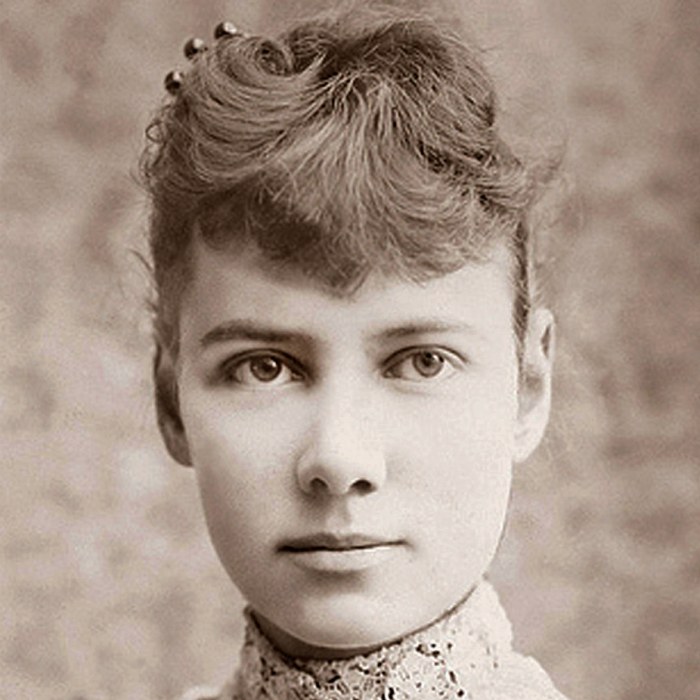
Nellie Bly
Faked madness to expose an asylum, then beat Jules Verne's fictional trip around the world
Elizabeth Cochrane grew up in Pennsylvania and took the pen name Nellie Bly after her father died and left the family short of money. Newspapers of the time gave women society pages and recipes, so at twenty-three she talked her way into an assignment no one else wanted: getting committed to the Women's Lunatic Asylum on Blackwell's Island to report on conditions from inside. She practiced a blank stare in front of a mirror, convinced doctors and a judge she was insane, and spent ten days documenting cold baths, rotten food and violent attendants before her newspaper arranged her release.
The resulting book, Ten Days in a Mad-House, forced a grand jury investigation and new funding for patient care. It also made her one of the most famous reporters in America, and in 1889 she proposed something bigger: travelling around the world faster than Phileas Fogg's fictional eighty days in Jules Verne's novel.
She left New York with one bag and returned seventy-two days, six hours and eleven minutes later, having crossed the Atlantic by steamer, visited Verne himself in France, and raced home ahead of a rival journalist sent by a competing magazine on the same challenge.
She later ran her husband's manufacturing company after his death, patented an improved steel barrel, and covered the Eastern Front as a war correspondent before her death from pneumonia in 1922.