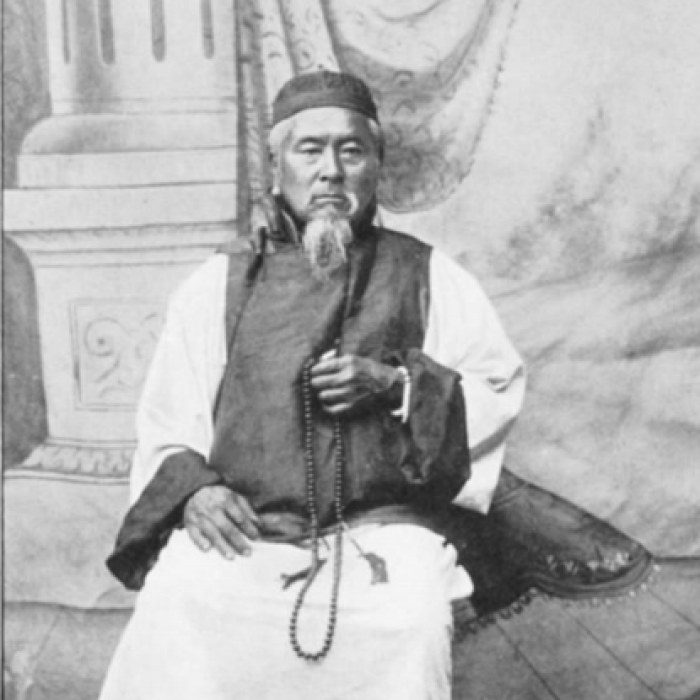
Kinthup
Sold into slavery mid-mission, he still finished the survey no one believed for thirty years
Kinthup was a Lepcha man from Sikkim, recruited by the Survey of India's Trigonometrical Survey as one of the "pundits," local surveyors trained to travel disguised through Tibet and other closed territories where Europeans could not go, counting their paces on strings of prayer beads and hiding compasses in prayer wheels.
In 1880 his British superior, Captain Henry Harman, sent him into Tibet with a Chinese lama to solve a major geographical puzzle: whether the Tsangpo River of Tibet was the same river that became the Brahmaputra in India, or flowed instead to the Pacific. The plan was for Kinthup to cut and mark five hundred logs and release them into the river on a set date, while observers waited downstream in Assam to spot them passing.
The lama betrayed him partway through the journey, selling him into slavery at a monastery. Kinthup escaped, but rather than abandon the mission he worked his way back toward the river, eventually persuading a monastery official to let him leave on pilgrimage. He cut and released the marked logs as planned and sent a letter ahead to warn the watchers in Assam. The letter never arrived; his original superior had since left India, and no one was watching the river when the logs floated past.
Kinthup made his own way home in 1884 with his account of the river's course, but with no logs recovered and a note nobody had read, his report was dismissed by the Survey for years. It was only confirmed correct by later expeditions after 1913, by which time Kinthup was an old man working as a tailor again, uncelebrated for a piece of exploration that had cost him his freedom.