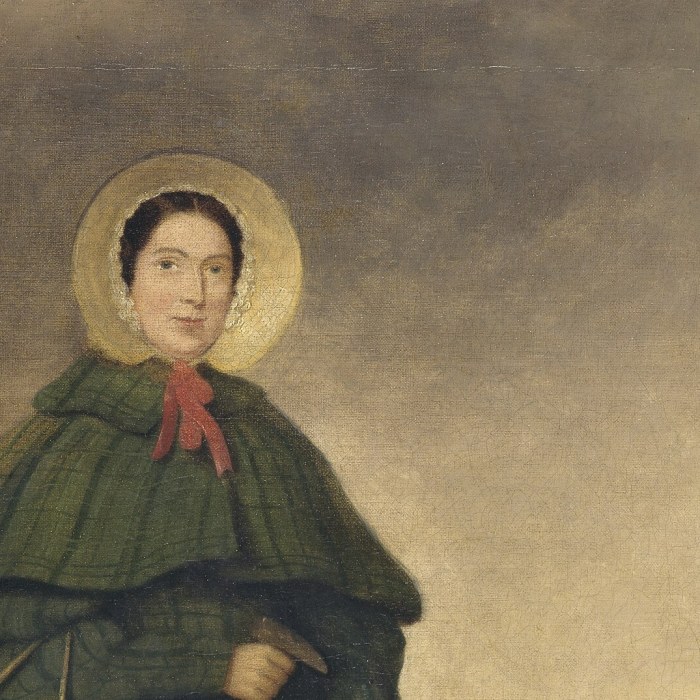
Mary Anning
A self-taught fossil hunter who changed how the world understood prehistoric life
Mary Anning grew up in Lyme Regis on the Dorset coast, where her father, a cabinetmaker, sold fossils from the cliffs to tourists to supplement a thin income. He died when she was 11, leaving the family in debt. She and her brother kept collecting because they had to eat.
At 12 she uncovered a skull, and over months chipped out the rest of a 5-metre creature that nobody could name. It was the first ichthyosaur to be correctly identified. In 1823 she found a complete plesiosaur so strange that the great French anatomist Georges Cuvier initially declared it a fake. It was genuine, and he said so. She went on to find the first British pterosaur and worked out that the stones known as bezoars were fossilised dung.
She taught herself geology and anatomy by copying scientific papers by hand and dissecting modern fish and squid to compare with her finds. The cliffs she worked were dangerous; a landslide in 1833 killed her dog and nearly killed her.
Geology was a gentleman's science. Anning could not join the Geological Society, and the men who bought her specimens published papers without naming her. Late in life a few of them raised a small annuity for her. She died of breast cancer at 47. In 2010 the Royal Society named her among the ten British women who have most influenced the history of science.