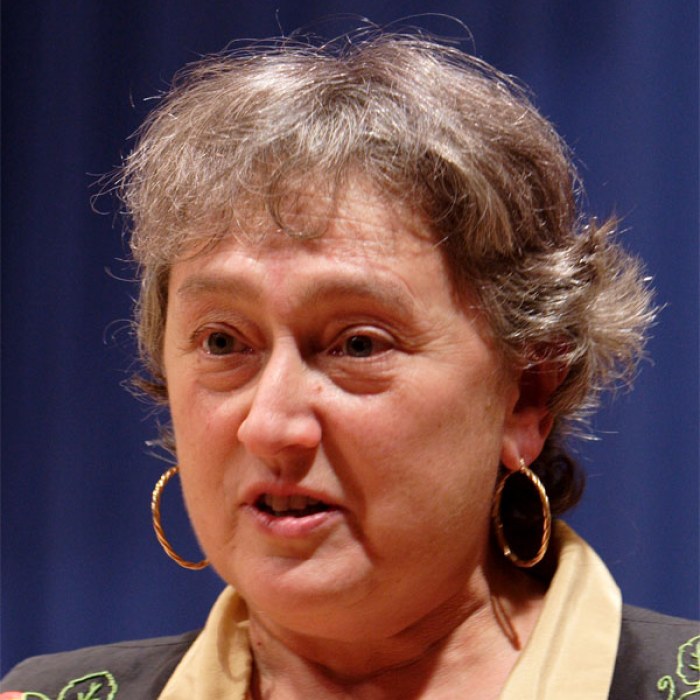
Lynn Margulis
Her paper on how complex cells arose was rejected fifteen times, and turned out to be right
Lynn Alexander was born in Chicago in 1938 and was admitted to the University of Chicago at 14. There she met and, at 19, married the astronomer Carl Sagan, and had two sons while completing a master's degree in Wisconsin and a doctorate at Berkeley in 1965. The marriage ended. She later said that being a good wife, a good mother and a first-class scientist was not possible, and that she had given up the first.
Her doctoral work on the genetics of the tiny green alga Euglena led her to an old and unfashionable idea. Mitochondria, which produce energy in every animal cell, and chloroplasts, which capture sunlight in plants, have their own DNA. She proposed that they were the descendants of bacteria that had been engulfed by other cells more than a billion years ago and had stayed on as partners rather than being digested. Complex life, in other words, began as a merger.
The paper was rejected by around fifteen journals before it was published in 1967. Reviewers found it speculative. Through the 1970s she was told, sometimes to her face, that the theory was nonsense. In 1978 comparisons of the genetic sequences of chloroplasts and bacteria showed that she was right, and endosymbiosis is now in every textbook.
She held a chair at the University of Massachusetts, worked with James Lovelock on the Gaia idea, remained combative all her life, and died in 2011 after a stroke, aged 73.