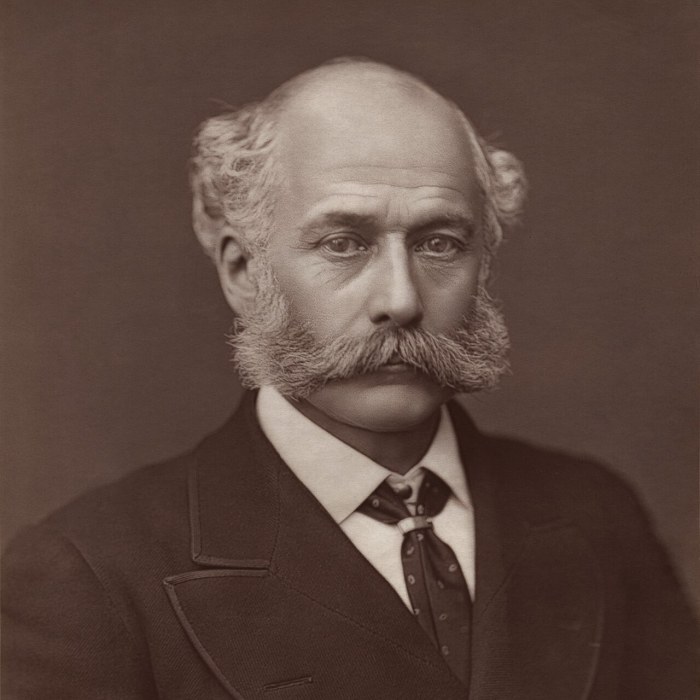
Joseph Bazalgette
Built the sewers that rid London of cholera and are still working 160 years later
In the 1840s and 1850s London poured its waste straight into the Thames, the same river from which much of the city drew its drinking water. Cholera killed more than ten thousand people in 1848 and again in 1853. Everyone agreed something must be done and, for years, nothing was.
Joseph Bazalgette, the son of a naval captain, had trained as a civil engineer on railway and drainage schemes and worked so hard during the railway boom of the 1840s that he suffered a nervous breakdown. In 1856 he became chief engineer of the new Metropolitan Board of Works and put forward a plan for a network of intercepting sewers that would carry waste east of the city and release it on the outgoing tide. Parliament rejected it, and rejected it again.
Then came the summer of 1858, the Great Stink, when the smell from the river was so bad that the curtains of the House of Commons were soaked in chloride of lime. Within weeks the money was found. Over the next sixteen years Bazalgette built 82 miles of main sewers and more than a thousand miles of street sewers, using some 318 million bricks. He reclaimed land from the river to build the Victoria, Albert and Chelsea embankments, hiding a sewer and an underground railway beneath the new roads.
The last cholera outbreak, in 1866, hit the one district not yet connected. The pipes he sized generously for a city he expected to grow still serve London today.