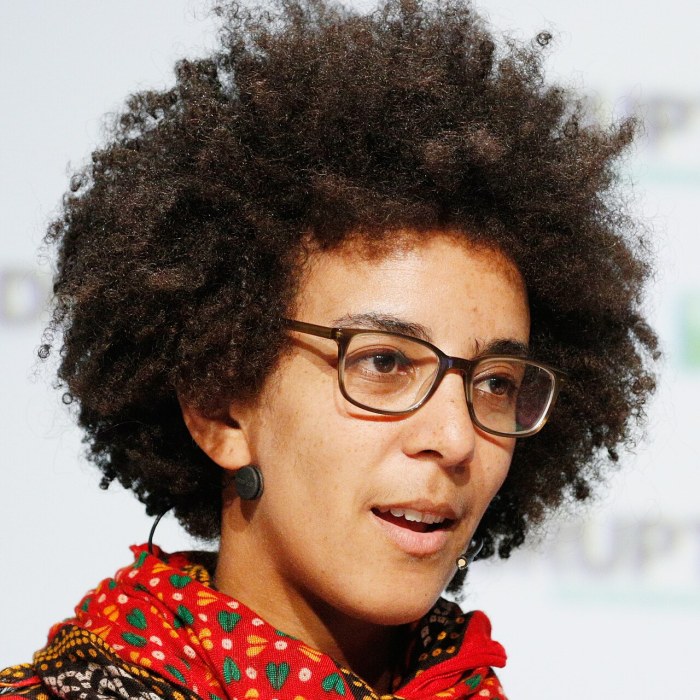
Timnit Gebru
Fled conflict as a teenager and became one of AI's most outspoken critics from inside a top research lab
Timnit Gebru grew up in Addis Ababa, Ethiopia, in a family with Eritrean roots, and left as a teenager when war broke out between Ethiopia and Eritrea in the late 1990s, arriving as a refugee in the United States with her education and sense of home disrupted. She rebuilt both, studying electrical engineering at Stanford, and later completing a PhD in computer vision, before shifting her research focus toward how artificial intelligence systems fail differently, and often more harshly, for people who are not white or male.
With Joy Buolamwini she co-authored influential research showing that commercial facial recognition systems performed far worse at identifying darker-skinned women than lighter-skinned men, work that pushed several large companies to pause or rework their facial recognition products. She went on to co-lead Google's Ethical AI team.
In late 2020 Gebru was pushed out of Google after internal conflict over a research paper she co-authored warning about the environmental costs and embedded biases of the very large language models the company was building, a departure she has described as a firing and Google has characterised differently. The episode became one of the most widely discussed disputes over corporate control of AI safety research. She went on to found the Distributed AI Research Institute, an independent organisation intended to study AI's harms without dependence on the companies building the technology.