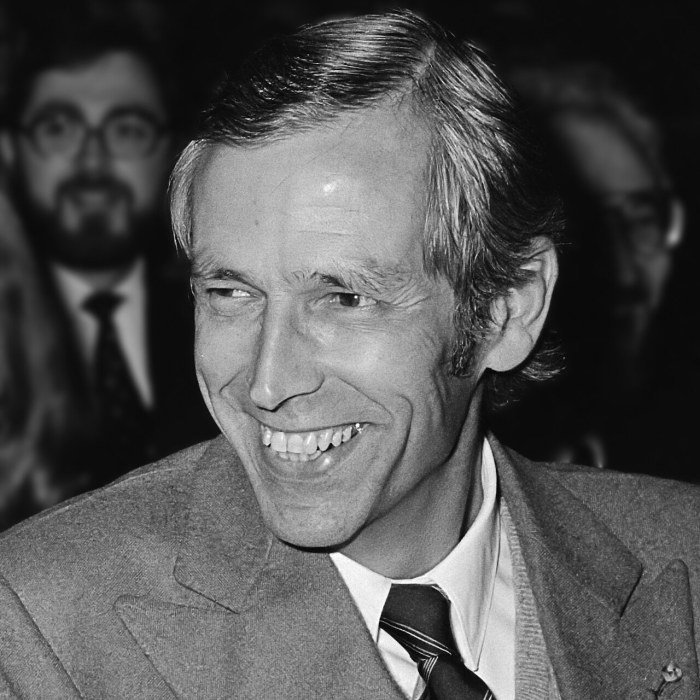
Jacques Piccard
Piloted a steel ball to the deepest place on Earth and found a fish looking back at him
Jacques Piccard was the son of the physicist Auguste Piccard, whose stratosphere balloon flights of the 1930s made the family name famous, and grew up helping his father develop the bathyscaphe, a deep-diving submersible built on similar pressure-vessel principles but designed to sink rather than rise, using a float of petrol for buoyancy and a small crew sphere able to withstand crushing ocean pressure.
By the late 1950s the design, refined into the vessel Trieste, had been purchased by the United States Navy, and Jacques Piccard was retained to help operate it alongside US Navy Lieutenant Don Walsh. On 23 January 1960 the two men sealed themselves into Trieste's small steel sphere and began a descent into the Challenger Deep, the deepest known point of the Mariana Trench in the Pacific, a dive that took nearly five hours.
They reached a depth of roughly 10,916 metres, deeper than Mount Everest is tall, where the pressure outside the sphere was more than a thousand times that at the surface. A window pane cracked partway down, a moment of real danger, but held long enough for them to continue. At the bottom, in near-total darkness pierced only by their lights, Piccard reported seeing what he believed was a flatfish on the sea floor, evidence, he argued at the time, that even the ocean's most extreme depths supported life, though the sighting has since been questioned by some marine biologists.
No other crewed vehicle returned to that exact depth for over fifty years. Piccard went on to design further submersibles for oceanographic research and died in Switzerland in 2008.