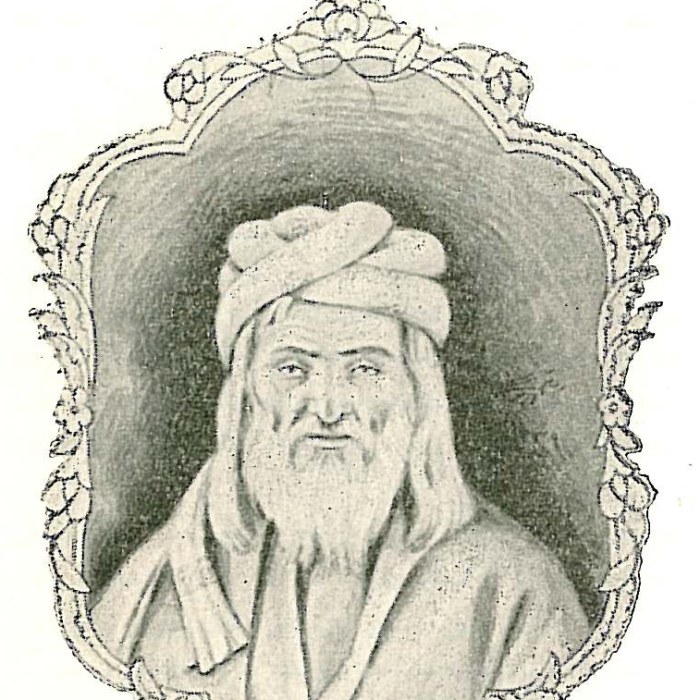
Nasir Khusraw
A Persian official who had a dream, gave up wine, and walked seven years to Mecca and Cairo
Nasir Khusraw worked as a financial official in the Seljuk administration in Persia, a comfortable post that involved, by his own later account, more wine and worldly pleasure than he was proud of. In 1046, after a dream in which he was told to seek the truth, he gave up alcohol, resigned his position, and set out on a journey that would last seven years, initially intending only to make the pilgrimage to Mecca.
He travelled first through Persia and the Caucasus toward the Arabian peninsula, performing several pilgrimages to Mecca over the following years, and then spent an extended period living in Cairo under the Fatimid caliphate, which was then at the height of its intellectual and architectural achievement. He studied Ismaili philosophy there and was eventually appointed a religious missionary for the movement, a role that would later cost him dearly.
His return journey took him back across Arabia and Persia to his home region of Balkh, in what is now northern Afghanistan, by way of Basra. Throughout he kept a careful record of distances, prices, buildings, crops and the daily life of the places he passed through, later compiled into the Safarnama, a travelogue valued as much for its precise, practical detail as for its literary quality.
His Ismaili beliefs made him unwelcome at home once local rulers turned hostile to the sect, and he was forced into exile in the remote valley of Yumgan in Badakhshan, where he spent his final years writing poetry and philosophy before his death around 1088.