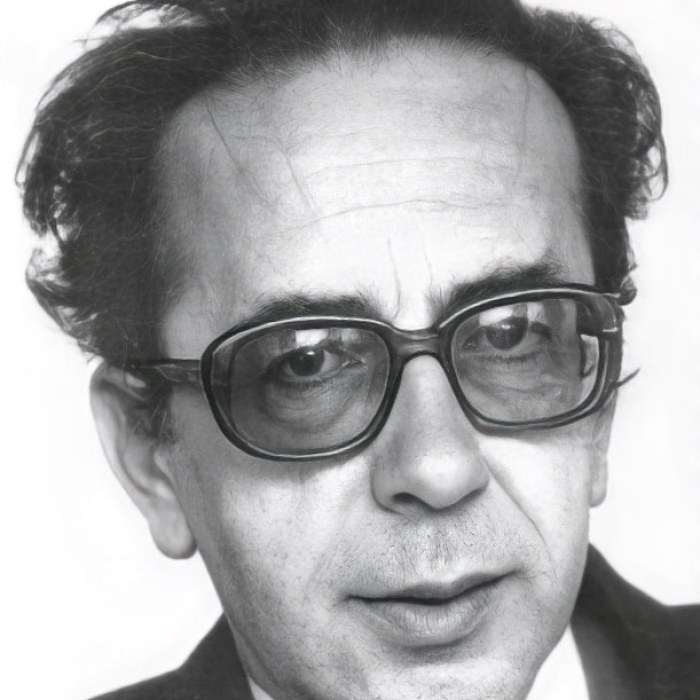
Ismail Kadare
Wrote coded novels under one of Europe's harshest dictatorships and defected days before it fell
Ismail Kadare grew up in the fortress town of Gjirokaster in southern Albania and studied literature in Tirana before spending time at the Gorky Institute in Moscow, an experience that left him deeply sceptical of Soviet-style cultural doctrine. He returned to an Albania that, under Enver Hoxha, had become one of the most closed and repressive states in Europe, cut off even from its former Communist allies.
Writing under constant censorship, Kadare developed a style that used historical settings, folklore and allegory, Ottoman-era sieges, ancient legends, dream bureaucracies, to comment obliquely on present-day tyranny without stating it directly. Novels such as The General of the Dead Army and The Palace of Dreams won him an international readership even as some of his other work was banned or forced into revision at home. His position remained delicate throughout: he was never simply a dissident, but nor was he ever fully trusted by the regime.
In 1990, as Communist rule across Eastern Europe was collapsing and Albania's own system was visibly weakening, Kadare requested asylum in France, a defection that came only weeks before the Albanian government itself began to unravel.
He continued writing prolifically in France and Albania after the transition, and in 2005 won the inaugural Man Booker International Prize, recognising his body of work. He died in 2024.