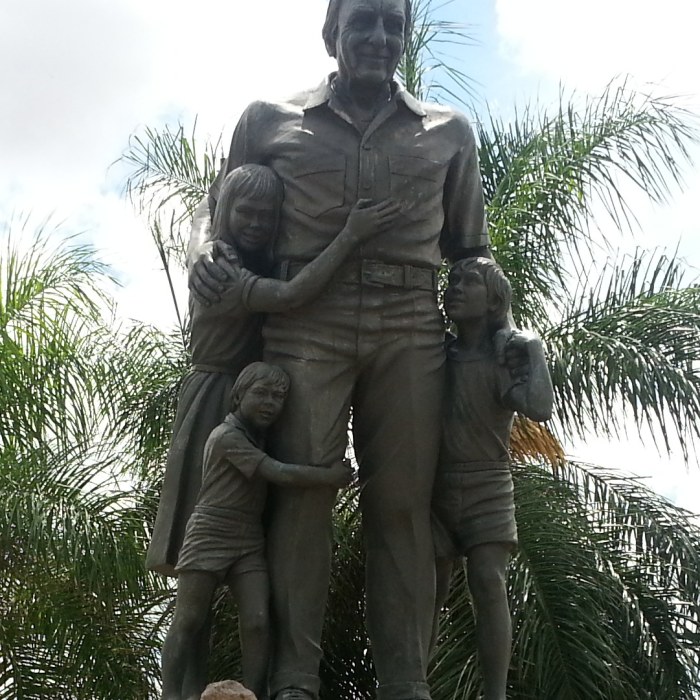
Hermann Gmeiner
A war-scarred medical student who built a village for orphans with 600 schillings and a simple idea
Hermann Gmeiner was born in 1919 on a small farm in Vorarlberg, western Austria, the sixth of nine children. His mother died when he was five, and his eldest sister Elsa, then sixteen, gave up her own prospects to bring up the younger ones. He would later say that everything he did came from that experience of a home held together by one determined woman.
He served on the Eastern Front in the Second World War and was badly wounded. Back in Innsbruck he began to study medicine, but he was also working with boys in a youth group, many of them orphaned or abandoned, and became convinced that the large institutions in which such children were kept were doing harm. His idea was almost domestic in its simplicity: a mother who lived with a small group of children as her own, in a house among other such houses, in a village that belonged to a real community.
In 1949 he gave up medicine and founded the SOS-Kinderdorf association with, by his own account, about 600 schillings in his pocket. He went from door to door asking people to give one schilling a month. The first village opened at Imst in the Tyrol that year. Critics said the model was sentimental and that it exploited the women who became village mothers, some of which he took to heart.
By the time he died in 1986 there were villages in dozens of countries. He is buried at Imst.