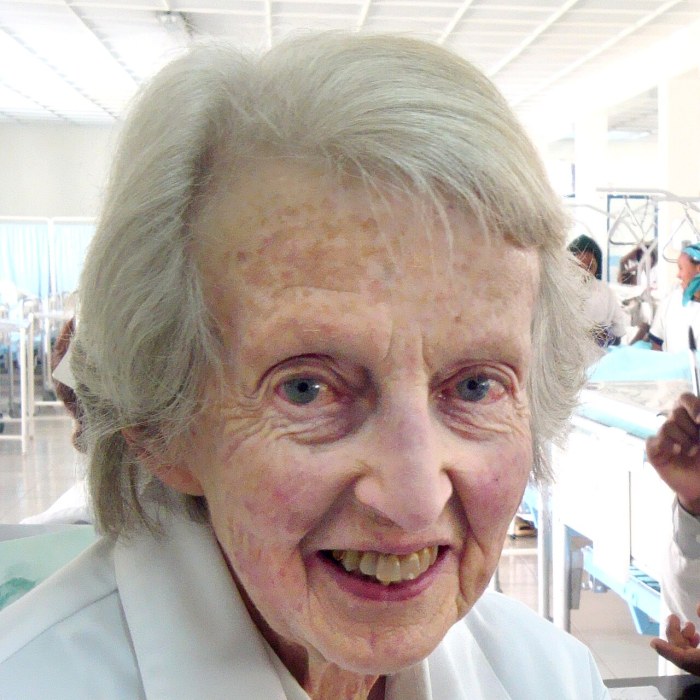
Catherine Hamlin
Went to Ethiopia for three years in 1959 and stayed for the rest of her life, mending broken women
Catherine Nicholson trained as a doctor in Sydney and met her husband Reg Hamlin, a New Zealander, while both were working in obstetrics. In 1959 they answered an advertisement in The Lancet for a couple to set up a midwifery school in Addis Ababa, and expected to be there three years.
Soon after arriving they met their first patient with obstetric fistula, an injury almost unknown in rich countries: after days of obstructed labour, usually ending in a stillbirth, a hole is torn between the bladder or bowel and the birth canal, leaving a woman permanently incontinent. In rural Ethiopia such women were often abandoned by their husbands and shut out of village life. Neither Hamlin had ever seen a case. They read what little had been written, taught themselves the surgery and improved on it operation by operation.
Word spread and women walked for days to reach them. In 1974, in the year the emperor was overthrown, the Hamlins opened the Addis Ababa Fistula Hospital, treating patients free. They stayed through the revolution, the Derg terror and famine. Reg died in 1993 and Catherine, then nearly seventy, carried on alone, adding regional hospitals and, in 2007, a college of midwives to prevent the injury in the first place.
She was nominated twice for the Nobel Peace Prize and continued to live in her cottage in the hospital grounds until she died there in 2020, aged 96.