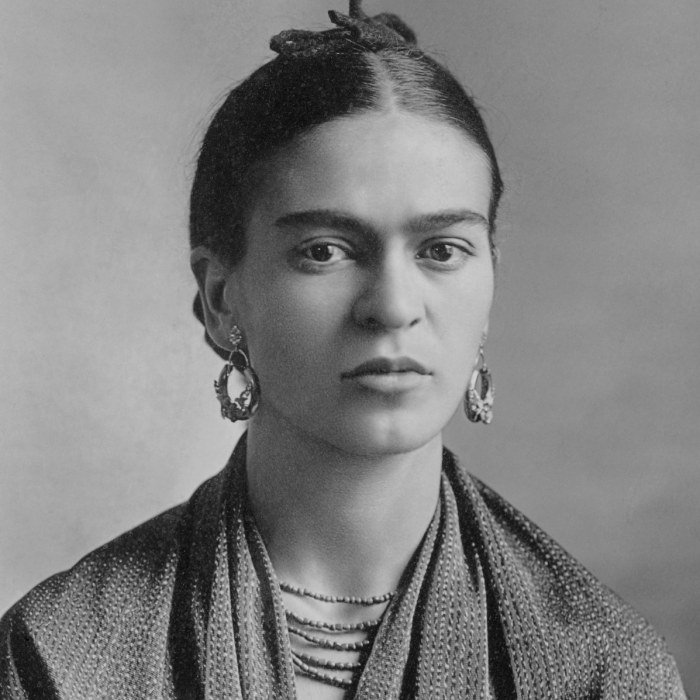
Frida Kahlo
Turned a lifetime of physical pain into some of the most recognisable paintings of the twentieth century
Frida Kahlo contracted polio at six, which left one leg thinner and shorter than the other. At 18, when she was planning to study medicine, the bus she was riding collided with a tram. A steel handrail went through her pelvis; her spine, collarbone, ribs and leg were broken. She spent months in a full-body cast.
Her mother had a special easel made so she could paint lying down, and a mirror fixed above the bed. Self-portraits became her subject because, she said, she was the person she knew best. Over the rest of her life she had more than 30 operations and often painted wearing a plaster or steel corset.
Her work is unflinching. She painted her miscarriage, her broken spine as a shattered column, her own heart lying on a beach. She dressed in traditional Tehuana clothing and made her Mexican identity central to her art at a time when most artists in her circle looked to Europe. Her marriage to the muralist Diego Rivera was turbulent and she was long seen mostly as his wife.
She had her first solo exhibition in Mexico in 1953, a year before she died. Too ill to walk, she arrived by ambulance and received guests from a four-poster bed set up in the gallery. Today she is far more famous than Rivera, and her house in Coyoacán, the Blue House, is one of the most visited museums in Mexico.