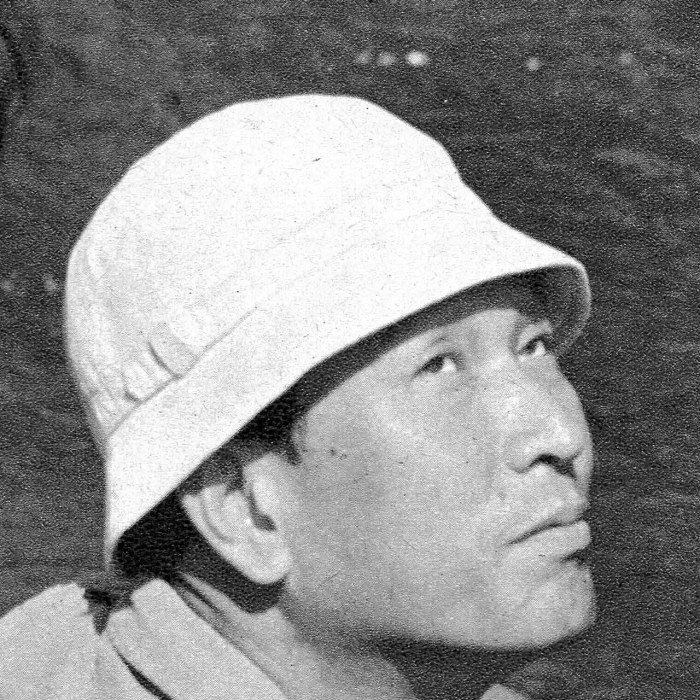
Akira Kurosawa
Written off and suicidal at 61, he came back to make Kagemusha and Ran
Akira Kurosawa was born in Tokyo, the youngest of eight children. His older brother Heigo, who worked as a narrator for silent films, took him to the cinema and to see the corpses after the 1923 earthquake, telling him not to look away. Heigo killed himself in 1933. Akira, who had wanted to be a painter, answered a newspaper advertisement for assistant directors at a film studio in 1936 and was accepted almost by accident.
He directed his first film in 1943 under wartime censorship. Rashomon, made in 1950, was sent to the Venice Film Festival without his knowledge and won the Golden Lion, opening the West to Japanese cinema. Seven Samurai, Ikiru, Throne of Blood and Yojimbo followed through the 1950s and early 1960s.
Then the industry changed. Colour and television made his slow, expensive productions hard to fund. In 1968 he was sacked from the American war film Tora! Tora! Tora! amid rumours about his mental state. His 1970 film Dodesukaden lost money. In December 1971 he slashed his wrists and throat in his bathroom. He survived.
The Soviet Union paid for Dersu Uzala, which won an Oscar in 1976. Francis Ford Coppola and George Lucas persuaded Twentieth Century Fox to back Kagemusha in 1980, and French money financed Ran, his version of King Lear, in 1985. He received an honorary Academy Award in 1990 and made his last film at 83.