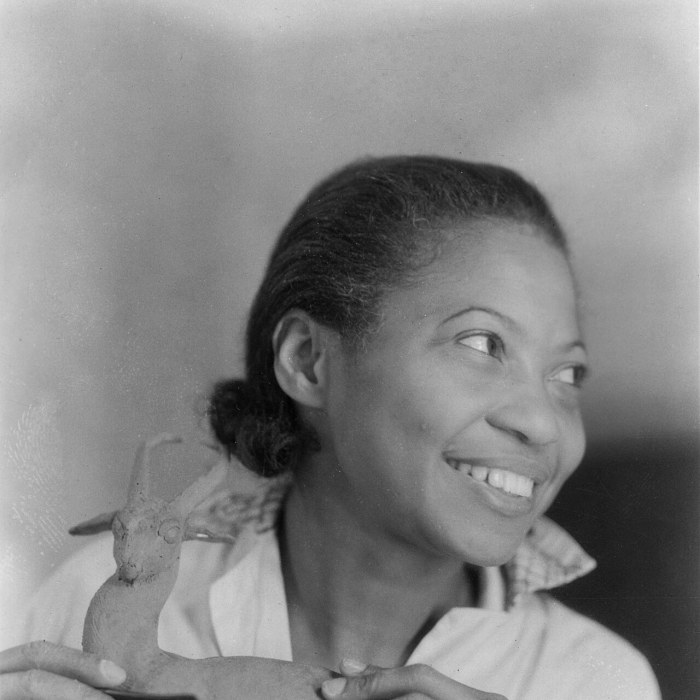
Augusta Savage
Beaten for making clay figures as a child, she became a leading sculptor of the Harlem Renaissance
Augusta Fells was born in Green Cove Springs, Florida, one of fourteen children of a Methodist minister who believed that making images was sinful and whipped her for shaping ducks and other figures out of the red clay in the yard. She kept doing it. Married at fifteen and widowed soon after, she eventually left the South for New York in 1921 with a few dollars and a letter of introduction.
Cooper Union admitted her and she completed the four-year course in three. In 1923 she was accepted for a summer programme for American women at Fontainebleau in France, then rejected when the committee discovered she was Black. Instead of accepting it quietly she wrote to newspapers, and the case became a national scandal. A bust of a Harlem street boy, Gamin, finally won her a fellowship to Paris in 1929.
Back in Harlem during the Depression she opened a free studio in a basement and taught anyone who came, including the teenagers Jacob Lawrence and Norman Lewis. She was the first Black woman elected to the National Association of Women Painters and Sculptors and became the first director of the Harlem Community Art Center.
For the 1939 World's Fair she made The Harp, a five-metre sculpture of singing figures. She could not afford to have it cast in bronze and it was bulldozed when the fair closed. She retired to a farm in upstate New York and died of cancer in 1962, largely forgotten.