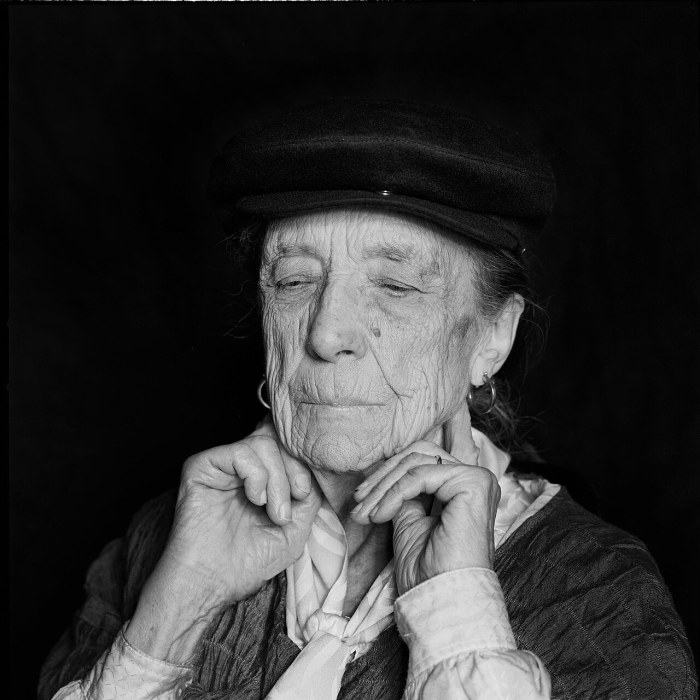
Louise Bourgeois
Worked for fifty years in near obscurity and had her first major retrospective at 70
Louise Bourgeois was born in Paris to parents who restored antique tapestries. As a child she drew in the missing sections of the designs, usually feet, so the weavers could repair them. The household was not a happy one: her father kept his mistress, the children's English governess, living under the same roof for years, and the anger Louise felt about that would feed her work for the rest of her life.
She studied mathematics at the Sorbonne before switching to art, and in 1938 married an American art historian and moved to New York. For the next four decades she raised three sons and made sculpture that critics found hard to place: wooden totems, hanging forms, latex and plaster pieces about bodies, houses and fear. She showed occasionally, but the market and the museums were busy with abstract expressionism, then pop and minimalism.
The turn came in 1982, when the Museum of Modern Art gave her a retrospective, its first for a woman artist. She was 70. Suddenly her work about memory, sex and childhood looked prophetic, and a new generation of artists began coming to the Sunday salons she ran in her Chelsea home, where she critiqued their work bluntly.
Her giant bronze spiders, titled Maman after her mother, filled the Tate Modern Turbine Hall when it opened in 2000. She kept working until her death in 2010 at 98.