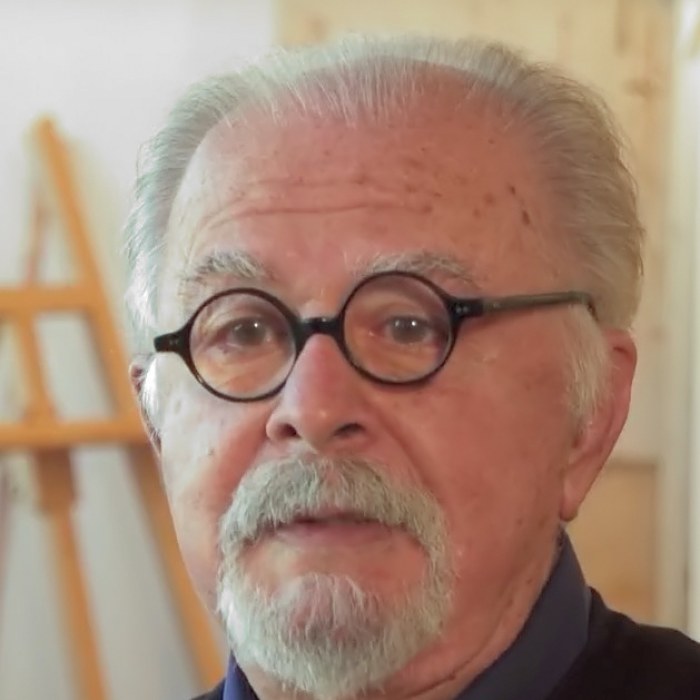
Fernando Botero
Expelled from school for defending Picasso, he made rotund figures Colombia's best-known artistic export
Fernando Botero grew up in Medellin, Colombia, and lost his father when he was four. An uncle, hoping to steer him toward a respectable career, enrolled him in a school for matadors, but the boy was more interested in drawing bullfights than fighting bulls, and sold his early sketches to help pay his own art school fees. He was expelled from a Jesuit high school as a teenager after publishing an article in praise of Picasso, considered scandalous in the conservative city.
He travelled to study art in Madrid, Paris and Florence, absorbing classical and Renaissance technique, before developing in his late twenties the distinctive style that would define his career: figures and objects rendered with exaggerated, rounded volume, applied equally to fruit bowls, generals, dancers and the Mona Lisa. His first solo exhibition in New York came in 1957 and he went on to become one of the most commercially successful living artists from Latin America.
Later in his career he turned the style to darker subjects, producing a series on Colombia's drug-trafficking violence and, in 2005, a set of paintings responding to photographs of prisoner abuse by American soldiers at Abu Ghraib prison in Iraq, work he made without payment because he considered it a moral obligation to record.
Botero donated large numbers of his own works and his personal art collection to museums in Bogota and Medellin. He died in Monaco in 2023.