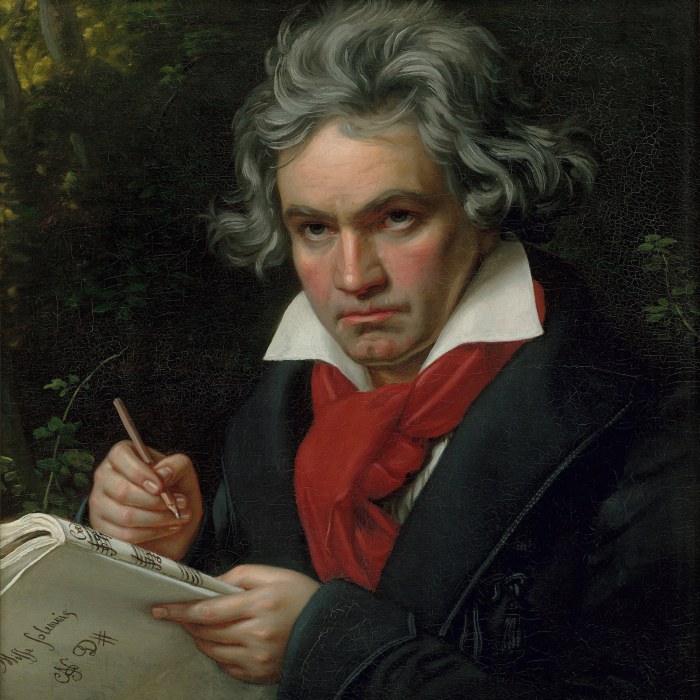
Ludwig van Beethoven
Went deaf in his twenties and wrote his greatest music when he could not hear a note of it
Ludwig van Beethoven was born in Bonn to a court singer who drank heavily and saw in his small son a chance to make money. The boy was dragged from bed to practise and beaten when he made mistakes. By his late teens, with his mother dead and his father sinking further into alcoholism, he was effectively head of the family, petitioning the court to pay half his father's salary directly to him so his younger brothers could eat.
He moved to Vienna in 1792 to study with Haydn and quickly made a name as a pianist of ferocious power. Around 1798 he began to notice a buzzing in his ears. By 1801 he was confiding to friends that he was going deaf and hiding it from everyone else. In 1802, staying in the village of Heiligenstadt, he wrote a letter to his brothers, never sent, in which he admitted he had thought of ending his life and had decided against it only because of the music still inside him.
What followed was the most productive period of his life: the Eroica, the Fifth Symphony, the Emperor Concerto, Fidelio. By his mid-forties he was almost entirely deaf and communicated through notebooks that visitors wrote in.
At the premiere of the Ninth Symphony in 1824 he stood with his back to the audience, beating time, and had to be turned round to see the applause he could not hear. He died in 1827. Some twenty thousand people followed his coffin.