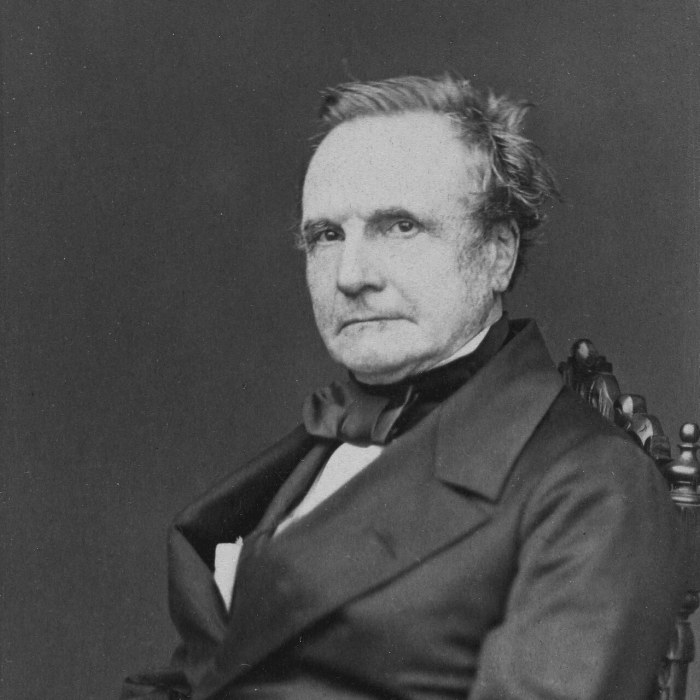
Charles Babbage
Designed the first general-purpose computer in the 1830s and never got to see it built
Charles Babbage was frustrated by the tables of numbers on which navigators, engineers and astronomers depended. They were calculated by hand and full of errors. In 1821, checking a set with his friend John Herschel, he said he wished the calculations could be done by steam.
The Difference Engine he designed to do it was the most complicated machine anyone had tried to build. The government paid for it, the engineer Joseph Clement made thousands of precision parts, and after ten years the two men quarrelled over money and the project stopped. A small working section, assembled in 1832, was all that ever ran in his lifetime.
By then Babbage had a far bigger idea. The Analytical Engine would take its instructions from punched cards, as the Jacquard loom did, store numbers in a memory, and make decisions based on results. It was, in every essential, a programmable computer, designed in brass and steam a century before electronics. He drew thousands of pages of plans, funded the work himself after the government lost patience, and was still redesigning it when he died. Ada Lovelace was one of the few who fully grasped what it could do.
He was a difficult, restless man who also invented a speedometer and the cowcatcher for locomotives, wrote on economics and campaigned against street musicians. In 1991 the Science Museum in London built his Difference Engine No. 2 to his drawings. It worked.