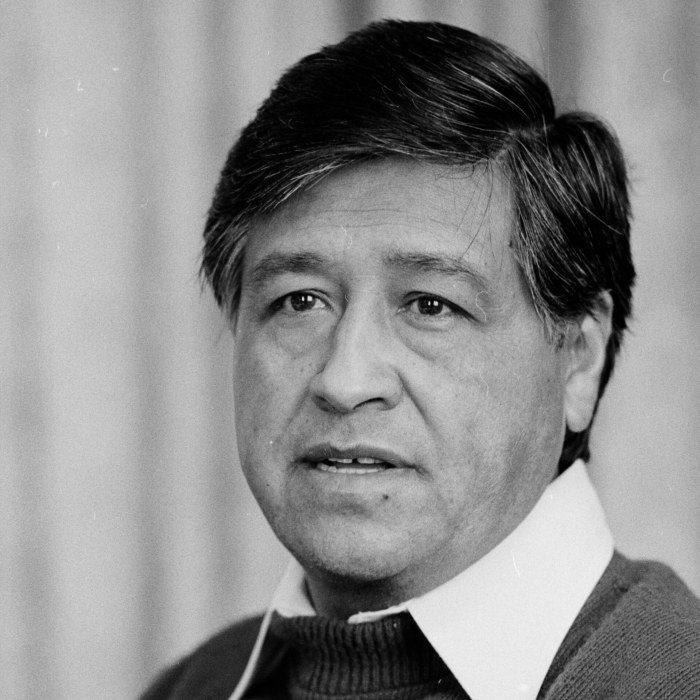
César Chávez
Turned farm workers no one thought could be organised into a union that won contracts
César Chávez was born in Yuma, Arizona, in 1927. His family lost their farm and store in the Depression and joined the stream of migrant workers moving through California's fields. He attended dozens of schools and left after eighth grade to work full time, serving two years in the Navy before returning to the fields.
In 1952 he was recruited by the Community Service Organization and spent ten years registering voters and running citizenship classes. In 1962 he quit, and with Dolores Huerta founded the National Farm Workers Association in Delano, going door to door for three years on almost no money. In 1965 Filipino grape pickers walked out and asked for support. He joined the strike, marched 340 miles to Sacramento and turned it into a national boycott of table grapes. In 1968 he fasted for 25 days to stop his members from answering the growers' violence with their own. In 1970 the growers signed.
He was a complicated leader. The union won a landmark California law in 1975 giving farm workers the right to organise, but in the late 1970s he purged staff he distrusted, imported group-confrontation sessions from a cult-like drug rehabilitation group, and opposed undocumented workers who broke strikes. Membership fell sharply. In 1988, aged 61, he fasted for 36 days against pesticides.
He died in 1993. His birthday is a holiday in several states, and the phrase his union made famous, "Sí, se puede", was actually coined by Huerta.